
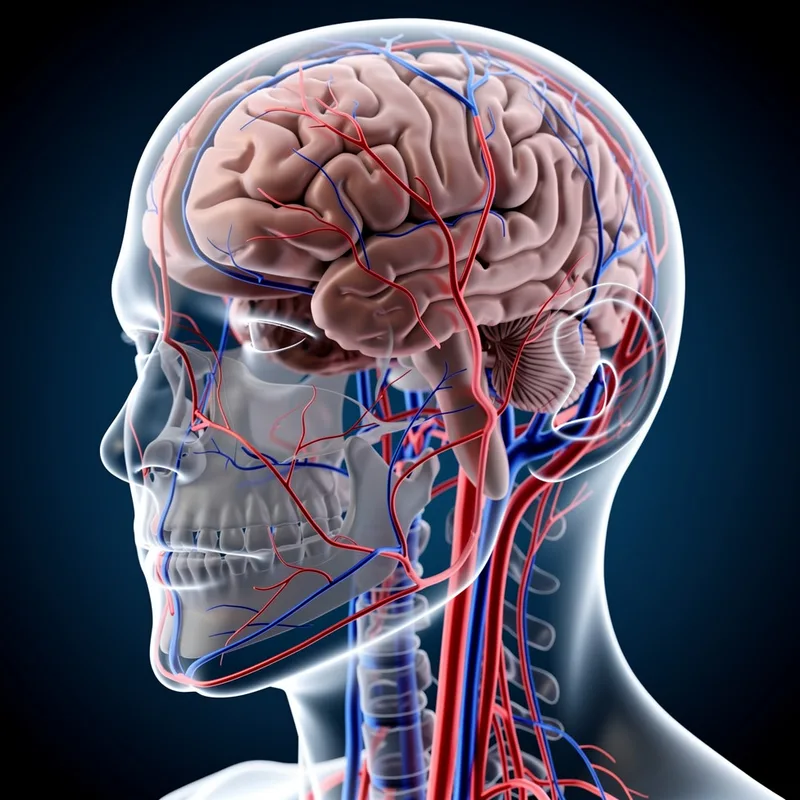
cerebrovascular
 1
6.9
1
6.9

- adjective
- /ˌsɛrəˈbroʊvæskjələr/
- Specialized
 :
cerebrovascular
:
cerebrovascular
- Cerebrovascular health is crucial for preventing strokes and other serious brain conditions.
- cerebrovascular disease
- cerebrovascular accident
- cerebrovascular event
Examples
-
The association between neurons and vessels varies significantly across the cerebrovascular network.
Academic text (2017) -
Patients with comorbid conditions such as diabetes or cerebrovascular disease.
Academic text (2012) -
The controls were free of medication and without any of the primary risk factors for cerebrovascular disease.
Academic text (1995) -
The patient was admitted for further evaluation with a possible diagnosis of cerebrovascular accident.
Academic text (2004) -
Consider the situation of an elderly Chinese woman who experienced hemiplegia following a cerebrovascular accident.
Academic text (2001) -
No subject had symptoms or clinical signs of coronary, peripheral, or cerebrovascular disease.
Academic text (1992) -
Hypertension also emerges early, followed by cerebrovascular disease and stroke.
Academic text (2004) -
Diabetes is associated with serious cardio- and cerebrovascular complications, which can lead to premature death.
Academic text (2012) -
Notably, she also had a personal history of a cerebrovascular accident at age 30, attributed to uncontrolled hypertension.
Academic text (2007) -
Antiplatelet therapy may be given to patients at risk for transient ischemic attacks or cerebrovascular accidents.
Academic text (2007)
Compounds

- Specialized

 1
5.8
1
5.8
A sudden event when blood flow to the brain stops and parts of the brain stop working, called a stroke
Surface Forms
Morphology
Etymology
Cerebrovascular comes from the Latin cerebrum meaning 'brain' and from vascular, which is linked to 'vessel', the tubes that carry blood. So cerebrovascular means 'relating to the brain and the blood vessels that supply it'.