
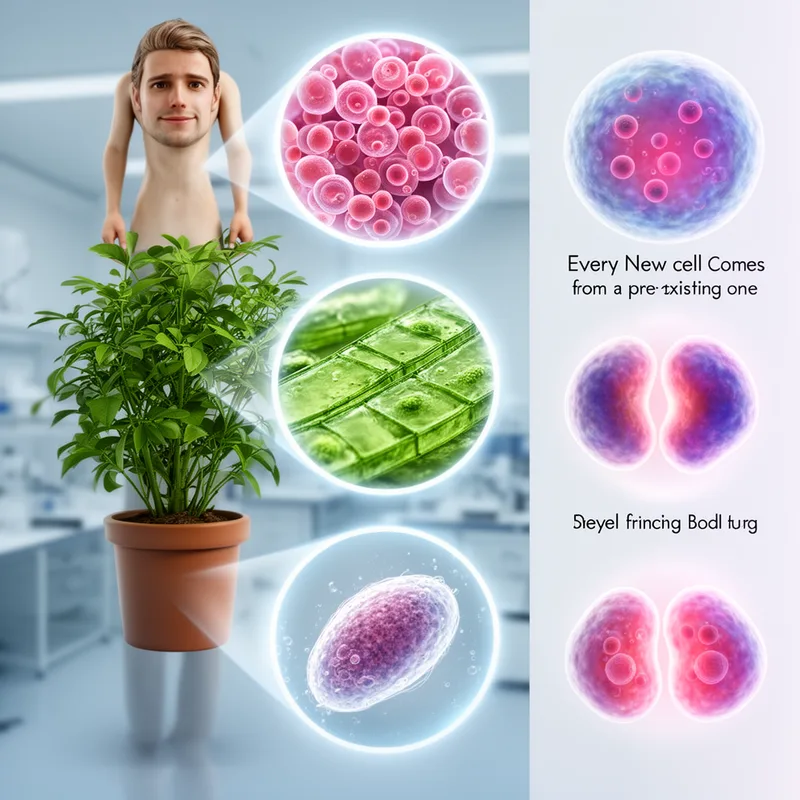
cell doctrine
- noun
- /sɛl ˈdɒktrɪn/
- Specialized
- The cell doctrine revolutionized biology by establishing the cell as the basic unit of all living organisms.
Examples
-
According to the cell doctrine, every new cell arises from a pre-existing cell.
-
The introduction of the cell doctrine in the 19th century marked a turning point in medical science.
-
The cell doctrine revolutionized our understanding of biology.
-
Many scientists accept the cell doctrine as fundamental.
-
According to the cell doctrine, every new cell arises from a pre-existing cell.
-
The cell doctrine revolutionized biology by establishing the cell as the basic unit of all living organisms.
-
Many scientists accept the cell doctrine as fundamental to understanding life forms.
Synonyms

An idea that says cells make up all living things
Surface Forms
Morphology
The meaning is directly and compositionally derived from 'cell' (the microscopic unit) + 'doctrine' (a taught principle or theory), i.e. a doctrine/theory about cells. This is a standard noun + noun/attributive pattern found cross-linguistically, so a B1 learner who knows both constituents would readily infer the intended scientific meaning.
Etymology
Cell doctrine comes from the word cell, which Robert Hooke used when he looked at cork through a simple microscope and saw tiny boxes that looked like small rooms or 'cells'. The word doctrine means an important 'teaching', so cell doctrine became the teaching that cells are the basic parts of all living things.

