
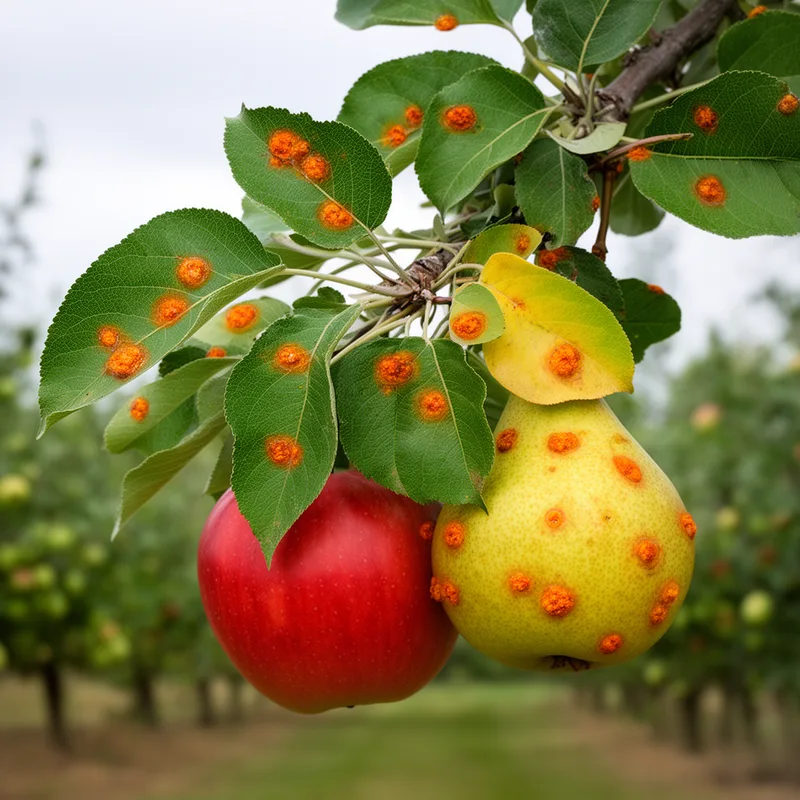
cedar-apple rust
- noun
- /ˈsiːdər ˈæpl rʌst/
- Specialized
- Farmers use fungicides to control the spread of cedar-apple rust on apple trees.
Examples
-
Cedar-apple rust can be identified by the orange spots it causes on infected leaves and fruit.
-
The cedar-apple rust affected my apple trees this year.
-
The orchard lost much of its crop to cedar-apple rust this season.
-
Have you seen the damage from cedar-apple rust?
-
This year's apple harvest was ruined by a widespread outbreak of cedar-apple rust, leaving many trees covered in rust-colored spots.
-
Farmers in the region reported significant damage to their crops due to cedar-apple rust, affecting both apples and pears.
-
To control cedar-apple rust, it is essential to remove nearby cedar trees that harbor the fungus responsible for the disease.
Synonyms
 3
6.9
3
6.9

A plant disease caused by a fungus that makes reddish-brown spots on leaves and stems
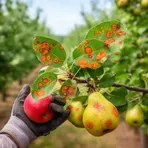
A disease on apple and pear trees that makes orange or brown spots
Surface Forms
Morphology
cedar-apple + rust
The noun 'rust' denotes a fungal disease, and the modifier 'cedar-apple' transparently names the host plants involved (cedar and apple). A B1 learner who knows 'cedar', 'apple', and 'rust' can readily infer this refers to a rust disease affecting those species, so the meaning is compositionally predictable.
Etymology
Cedar-apple rust comes from a fungus that lives on two trees, cedar and apple. The fungus makes orange, rust-colored spots on apple leaves and fruit, so people named the 'disease' after those trees and the orange rust spots.