

cavity resonator
- noun
- /ˈkævɪti ˈrɛzəˌneɪtər/
- Specialized
- A cavity resonator is used in microwave technology to enhance the strength of radio waves.
Examples
-
The design of the cavity resonator allows it to resonate at specific frequencies, improving signal quality.
-
In research laboratories, scientists often utilize a cavity resonator to study the behavior of light waves.
-
Also, even for a rectangular flexural resonator, the mechanical mode structure is very complex and differs from the harmonic structure for a rectangular electromagnetic cavity resonator.
Academic text (2006)
Synonyms

 9
7.6
9
7.6

A device that vibrates at certain frequencies to amplify or select signals
 1
7.2
1
7.2
A room made to make sound bounce and create echoes
 1
7.6
1
7.6
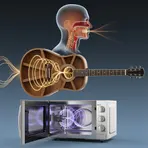
A hollow space that makes sound or microwaves stronger, like inside a guitar and microwave oven

A hollow part of a musical instrument like a guitar or violin that makes the sound louder
How Resonant
- Specialized

- Specialized
9
7.6
Surface Forms
Morphology
The meaning is directly compositional: it denotes a resonator that is a cavity (a hollow chamber) — combining 'cavity' (hollow) with 'resonator' (a device that vibrates/filters waves). This noun+noun technical compound follows regular English composition patterns, so a learner who knows both constituents can infer it refers to a hollow resonating chamber.
Etymology
The noun cavity resonator comes from a simple image: a hollow space called a cavity where waves such as light or sound bounce, and a part called a resonator that makes those bounces 'resonate'. Because the waves bounce and build up inside the cavity, the name means 'a chamber that holds and strengthens waves'.