
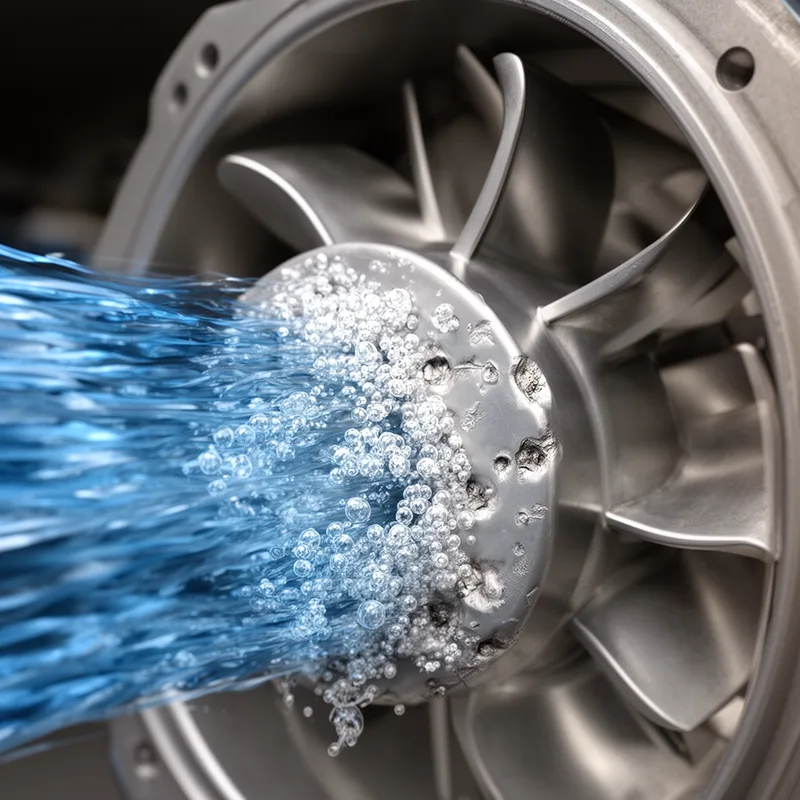
cavitation
 1
8.7

- noun
- /ˌkævɪˈteɪʃən/
- Specialized
- The notches achieve the required pressure drop while avoiding conditions that would cause cavitation and result in trim damage.
- prevent cavitation
- minimize cavitation
- bulk cavitation
Loading YouTube…
Watch on YouTubeThey work by generating microscopic cavitation bubbles.
- They work by generating microscopic cavitation bubbles.
- People think that the air bubbles shown in the video, that's cavitation.
- The speed of the water jet is so high that we get a drop of the pressure to below the vapor pressure of water, resulting in cavitation.
Examples
-
Superior pump design via CFD also minimizes cavitation, which occurs when the local pressure drops below the vapor pressure of the fluid.
Academic text (1996) -
Yet fluid behavior in the middle of the pump does have a major influence on both pump efficiency and cavitation-erosion characteristics.
Academic text (1996) -
One example was improving the cavitation performance of the boiler feed pumps used to supply a Canadian nuclear power plant.
Academic text (1996) -
The viscous material causes a pressure drop that may lead to bulk cavitation.
Academic text (1999) -
By reducing cavitation, pump designers reduce maintenance downtime and costs.
Academic text (1996) -
The pump's geometry was then changed to provide an acceptable distribution that will prevent cavitation, recirculation, and separation.
Academic text (1996) -
Preventing fluid cavitation at the pump inlet is a major concern when working with optically clear material, such as doming resins.
Academic text (2004) -
The PluraShot's rotary pump action helps to prevent cavitation in two-part doming resins.
Academic text (2004) -
The PluraShot's servo-drive and rotary pump action allows microflow rate adjustments that help to prevent cavitation, according to Stephen Gordon, director of engineering for Fluid Research.
Academic text (2004) -
Cavitation can cause significant damage to underwater propellers when the local pressure drops too low.
Surface Forms
Morphology
Etymology
Cavitation comes from the old Latin word cavus, which means 'hollow' or 'cave', so you can picture tiny caves made by bubbles in fast-moving water that hit a pump. So cavitation is the formation of those hollow bubbles in a liquid that can cause damage.