
cathodoluminescence


 1
9.9
- noun
- /ˌkæθoʊˌluːmɪˈnɛsəns/
- Specialized
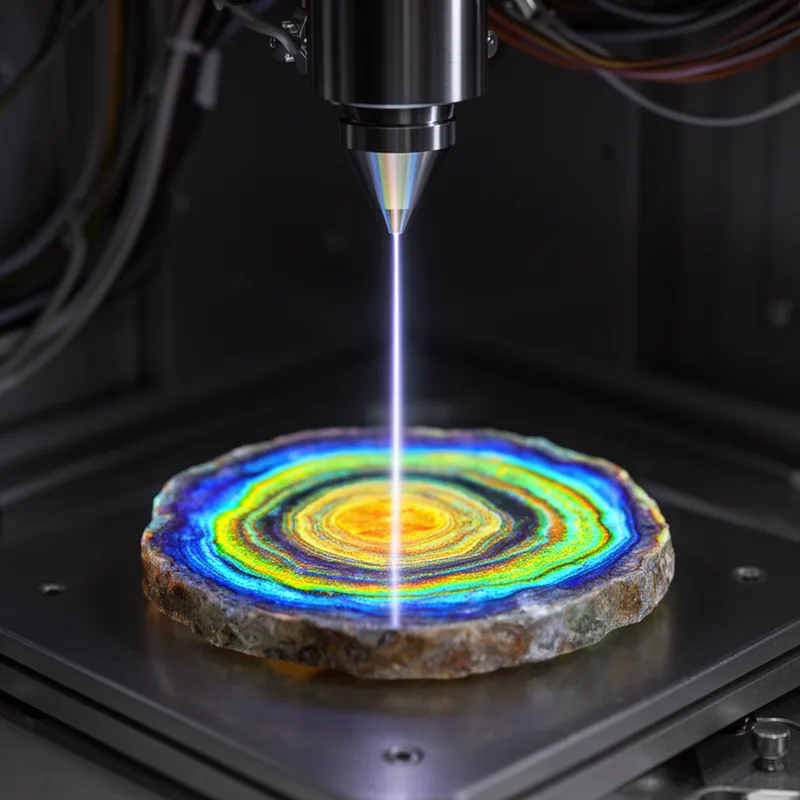
- The study of cathodoluminescence reveals important information about the geological history of a sample.
Examples
-
Scientists often use cathodoluminescence to explore the properties of minerals under an electron beam.
-
Cathodoluminescence System
Academic text (2003) -
APPLICATIONS: Surface physics, vacuum physics, charge neutralization, cathodoluminescence, space physics, semiconductor processing, RHEED, ESD. Custom designs.
Academic text (1997) -
Applications: Surface physics, vacuum physics, charge neutralization, cathodoluminescence, phosphor testing, semiconductor processing, RHEED, ESD.
Academic text (2004) -
Gatan has developed the MonoCL SP, a high-performance cathodoluminescence (CL) system that provides a parallel spectroscopy function with its attendant high speed.
Academic text (2003) -
Using cathodoluminescence, researchers were able to identify distinct mineral phases in the rock sample.
Surface Forms
Morphology
cathodoluminescence = cathode + luminescence (semi-transparent) = cathode + luminescence
The meaning is directly compositional from 'cathode' + 'luminescence', but the term uses a technical combining form ('cathodo-') and overall is domain-specific, which may limit inferability for general learners.
Etymology
Cathodoluminescence joins cathode ('part where electrons come from') and luminescence ('light given off'). So it means the 'light produced when electrons hit a material', and scientists use it to study minerals.