
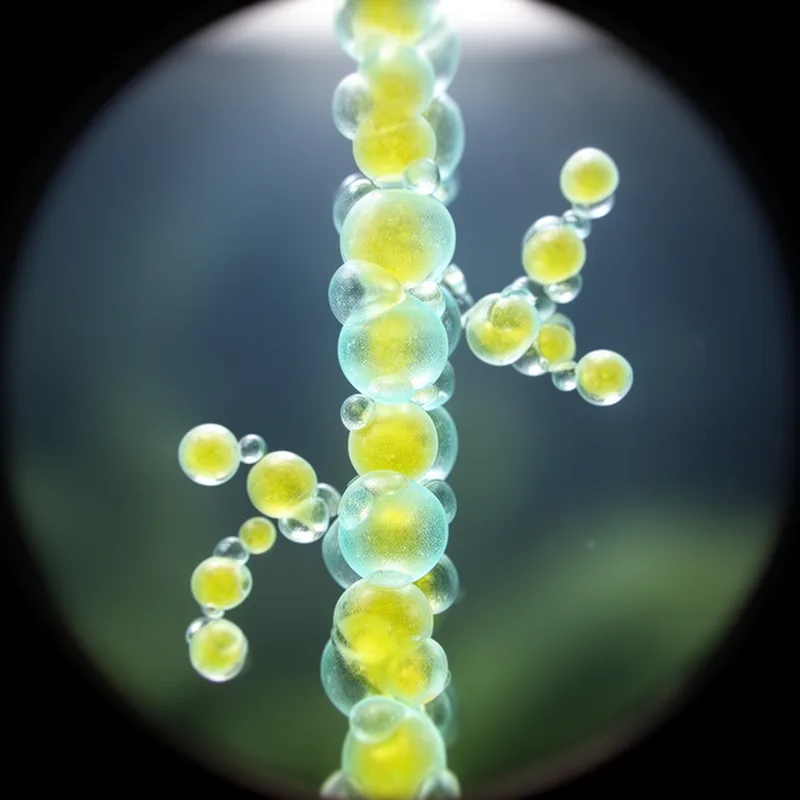
to catenulate
- verb
- /ˈkætəˌnjuːlɪt/
- Specialized
- The cells catenulated as they divided, making their arrangement easy to observe under the microscope.
Examples
-
Some fungal spores catenulate during reproduction, creating characteristic linked patterns.
-
Under certain conditions, bacteria catenulate to form long chains.
-
The researcher catenulates the spores for better observation.
-
In her experiment, she catenulated the cells to analyze their growth.
-
During its life cycle, the fungus catenulates its spores, creating distinct chains that are easily identified.
-
In the lab, we observed how certain algae catenulate to form interconnected filaments under optimal growth conditions.
-
The botanist noted that when conditions were just right, the cells would catenulate into long, visible strands.
Synonyms

To link things together in a chain
How Linked


Surface Forms
Morphology
catenulate = catenate (opaque) = caten + ulate
As a technical biological verb derived from the combining form 'caten-' plus '-ulate', the formation is not transparent to average learners.
Etymology
Catenulate comes from the Latin root catena meaning 'chain'. So, to catenulate is to link cells or spores together in a chain, which is why biologists use it for structures that form long connected rows.