
catechist
 2
9.9
2
9.9

- noun
- /ˈkætəˌkɪst/
- Formal
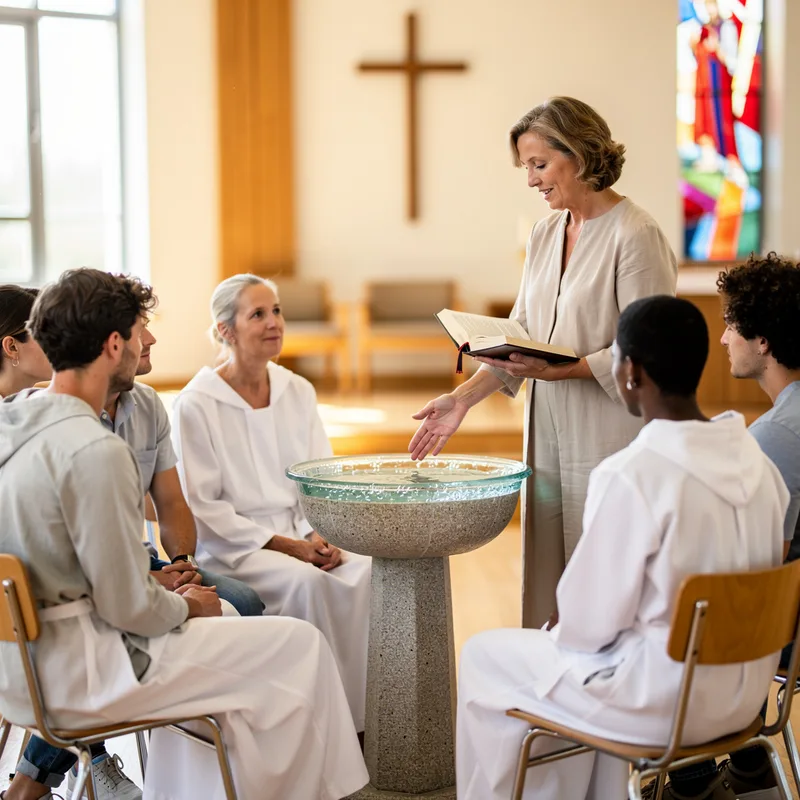
- The catechist taught the children about the importance of compassion and love in their faith.
- indigenous catechists
- local catechists
- village catechists
Examples
-
As religious authorities, catechists are sometimes called on to help resolve domestic quarrels and give moral instruction.
Academic text (2001) -
The catechist's authority rests in part on the knowledge the catechist brings back from this training.
Academic text (2001) -
Little else is required of the catechist's local social network.
Academic text (2001) -
Altogether, there were nine witnesses, including the various chiefs and the local catechist.
Academic text (2004) -
In reality, the authority of catechists tends to be rather weak.
Academic text (2001) -
The need for training catechists has not been seriously considered in many parishes.
Blog text (4) -
His love for Christ inspired him to train as a catechist with the Jesuit missionaries there.
Blog text (23) -
In article 18 of the Guide for Catechists, several criteria are provided for selecting catechists.
Blog text (4) -
We then entered the church where Jan, with the assistance of local catechists, presided over a crowded mass.
Academic text (2002) -
Calungsod was an 18-year-old lay catechist who was martyred in Guam for defending the faith.
Blog text (23)
How Instructional

Surface Forms
Morphology
catechist = catechism (transparent) = catech + ist
The agentive suffix '-ist' clearly yields 'a person who teaches or is associated with a catechism', so knowing 'catechism' allows deriving the meaning.
Etymology
Catechist comes from the Greek root katechein, which meant 'to teach by speaking', and it is the same root as catechism, the short question-and-answer guide about Christian beliefs. So a catechist is a person who teaches others the Christian faith, often helping prepare them for baptism.