
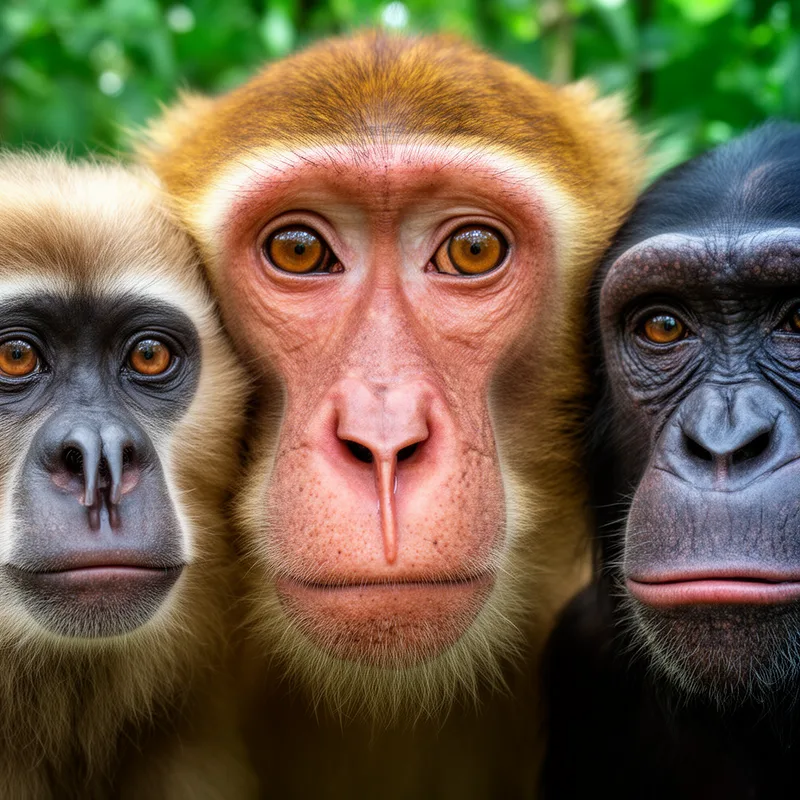
catarrhinian
- adjective
- /ˌkætəˈrɪniən/
- Specialized
- The catarrhinian monkeys of Africa are distinguished by their downward-facing nostrils.
Examples
-
Gibbons and macaques are both examples of catarrhinian species.
-
Anthropologists studied the differences between platyrrhine and catarrhinian primates.
-
The catarrhinian features of this species are fascinating.
-
Are all catarrhinian primates found in Africa?
-
Anthropologists studied the differences between platyrrhine and catarrhinian primates.
-
Gibbons and macaques are both examples of catarrhinian species.
-
The catarrhinian monkeys of Africa are distinguished by their downward-facing nostrils.
Synonyms
Relating to monkeys and apes from Africa and Asia that have nostrils close together and facing down
Surface Forms
Morphology
catarrhinian = catarrhine (opaque) = catarrhin + ian
Although formed by adding the productive suffix '-ian', the base 'catarrhine' is a specialized taxonomic term unfamiliar to average learners, so the meaning is not readily derivable.
Etymology
Catarrhinian comes from Greek parts kata- meaning 'down' and rhinos meaning 'nose', the same 'rhino' you see in rhinoceros. So it literally means 'down-nosed', which is why it describes Old World monkeys and apes whose nostrils are close together and point downward.

