
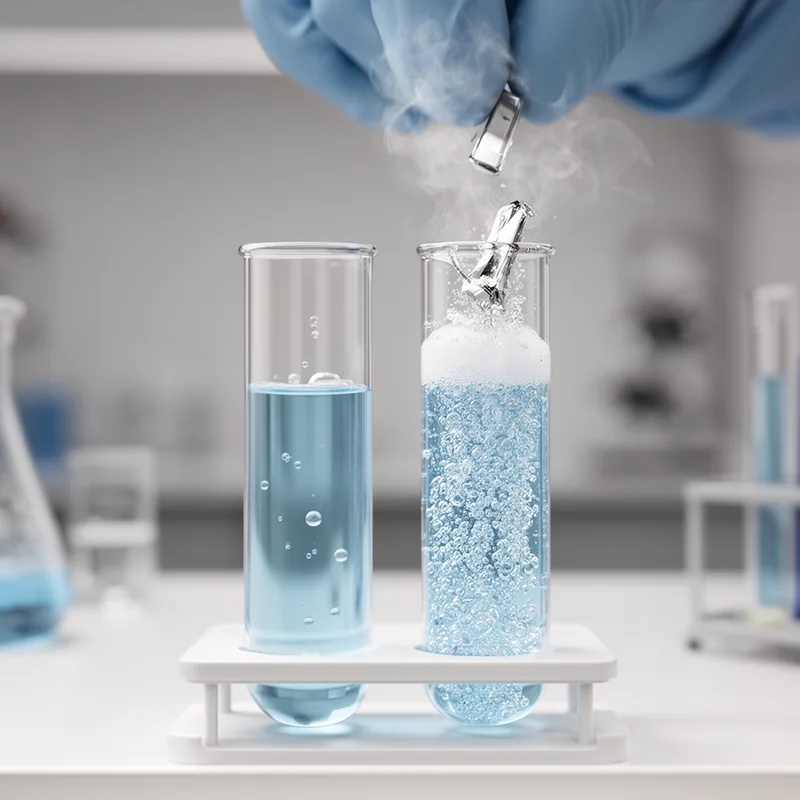
catalytically


 1
8.1
- adverb
- /ˌkætəˈlɪtɪkli/
- Specialized
- The enzyme works catalytically to accelerate the reaction without being consumed in the process.
- catalytically destroy
- catalytically active
Examples
-
The mutant enzyme, in addition to being catalytically active at pH 5.5, showed a 3.1-fold increased catalytic efficiency towards glucose.
Academic text (2015) -
The most obvious explanation would be that a catalytically active N-terminal domain provides a selective advantage apart from the potential to produce angiotensin II.
Academic text (2018) -
It turns out that certain materials like oxides are actually more catalytically active than the precious metals.
-
The realization that trace gases in the atmosphere could react catalytically with ozone provided an explanation.
Academic text (1993) -
Photodissociation would produce chlorine atoms, which would then catalytically destroy ozone.
Academic text (1993) -
The two major components of coal gas, carbon monoxide and hydrogen, are reacted catalytically to make methane and steam.
Academic text (2003) -
Once chlorine is liberated from the CFC by UV photolysis, it can catalytically destroy ozone.
Academic text (1998) -
Because NOx radicals also catalytically destroy stratospheric ozone, a constant ozone concentration is naturally maintained.
Academic text (1991) -
A catalytically active layer of zero-valent Pd forms on the Cu surface through a chemical displacement deposition reaction (Figure 3).
Academic text (1998) -
At the end of the polar winter, these molecules dissociate to form chlorine radicals under the influence of sunlight and catalytically destroy ozone at a rate dependent on the square of the chlorine oxide concentration.
Academic text (1991)
Surface Forms
Morphology
catalytically = catalytic (transparent) = catalyt + ic + ally
The adverb is regularly formed from the adjective 'catalytic' using the productive adverbial ending '-ally', so the relation is clear to learners who know the adjective.
Etymology
Catalytically comes from the noun catalyst, which comes from a Greek root meaning 'loosen' called lysis, the same element you see in analysis. A catalyst makes a change happen faster without being used up, so to act catalytically is to do something 'in a way that speeds up' a reaction.