
catadioptrics


 1
9.9
- noun
- /ˌkætəˈdaɪəptrɪks/
- Specialized
- By studying catadioptrics, engineers can create systems that minimize optical distortions.
Examples
-
The field of catadioptrics is important for designing advanced camera lenses and optical instruments.
-
The field of catadioptrics is essential for modern telescopes.
-
Modern telescopes often use catadioptrics to achieve clearer and more accurate images.
-
Have you studied catadioptrics in your physics class?
-
Many amateur astronomers are fascinated by catadioptrics because it combines the benefits of reflecting and refracting telescopes.
-
The study of catadioptrics provides valuable insights into how light behaves when it interacts with both mirrors and lenses.
-
Understanding catadioptrics is essential for those designing advanced optical systems for telescopes.
Surface Forms
Morphology
catadioptrics = dioptrics (opaque) = cata + dioptr + ics
The relation is a regular prefixation from the technical noun 'dioptrics', but the Greek combining form and the specialized technical sense make the formation hard for average learners to interpret.
Etymology
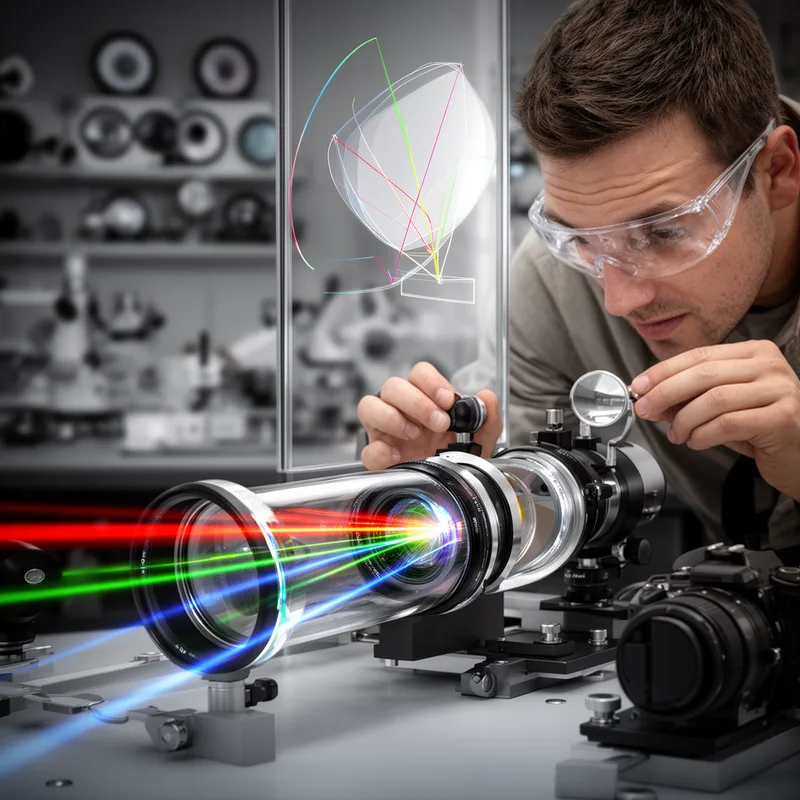
Catadioptrics comes from two parts that mean 'mirror' (catoptric) and 'lens' (dioptric). So, catadioptrics describes systems that both 'reflect' light like a mirror and 'bend' light like a lens to make clearer images.