

to cast a shadow
 4
6.2
4
6.2

- idiom
- /kæst ə ˈʃædoʊ/
- "This treaty business has cast a shadow over all of us, I fear."
Examples
-
The controversy surrounding the election has cast a shadow on the trust people have in the government.
-
In the election season, that cast a shadow over the Obama administration's foreign policy record.
Blog text (33) -
Talk like that could also cast a shadow over the future of the U.S. Sentencing Commission.
Academic text (2005) -
Impending death seemed to cast a shadow between those two proud souls.
Blog text (26) -
It's a dampening effect, casting a shadow over me everywhere I go.
Blog text (28) -
But recent events cast a shadow over those glowing renderings.
Blog text (21) -
Harbaugh's health scare cast a shadow on another injury watch: quarterback Alex Smith's recovery from a Sunday concussion.
Blog text (22) -
Corruption, no longer the preserve of the palace and the upper class, flourished and became more visible, discrediting the political class and casting a shadow over democracy.
Academic text (2005) -
President Fujimori's expressed reluctance to endorse US drug-related security assistance programs casts a shadow on the future of US-Peruvian cooperation in this area and raises an important question for US policymakers.
Academic text (1990) -
His harsh criticism cast a shadow over her confidence and made her doubt her abilities.
Synonyms
 17
4.6
17
4.6
Make people feel unsure if something is true
 15
5.4
15
5.4
To make something darker by blocking light
 4
8.2
4
8.2
Make a meeting or event feel gloomy and sad
 1
6.3
1
6.3
To make someone feel sad or discouraged

Make people feel uneasy, disappointed or uncomfortable
Antonyms

How Negative
4
8.2
 4
6.2
48
5.9
4
6.2
48
5.9
- Informal
11
5.8
Surface Forms
Morphology
The meaning 'to have a negative or troubling effect' is a direct metaphorical extension of 'cast' (to project/send forth) plus 'shadow' (darkness or gloom); a learner who knows both words can readily infer that something that 'casts a shadow over' an event makes it gloomy or troubling. This projection metaphor is common across languages and follows a straightforward compositional pattern, so it is readily understandable to a B1 learner.
Etymology
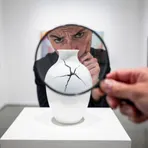
Cast a shadow comes from the simple image of something making a dark shape on the ground: when an object casts a shadow, it blocks light and makes the place feel darker. So, when news or events 'cast a shadow' on a person or event, they bring a 'negative' or 'worrying' effect that changes the mood.