
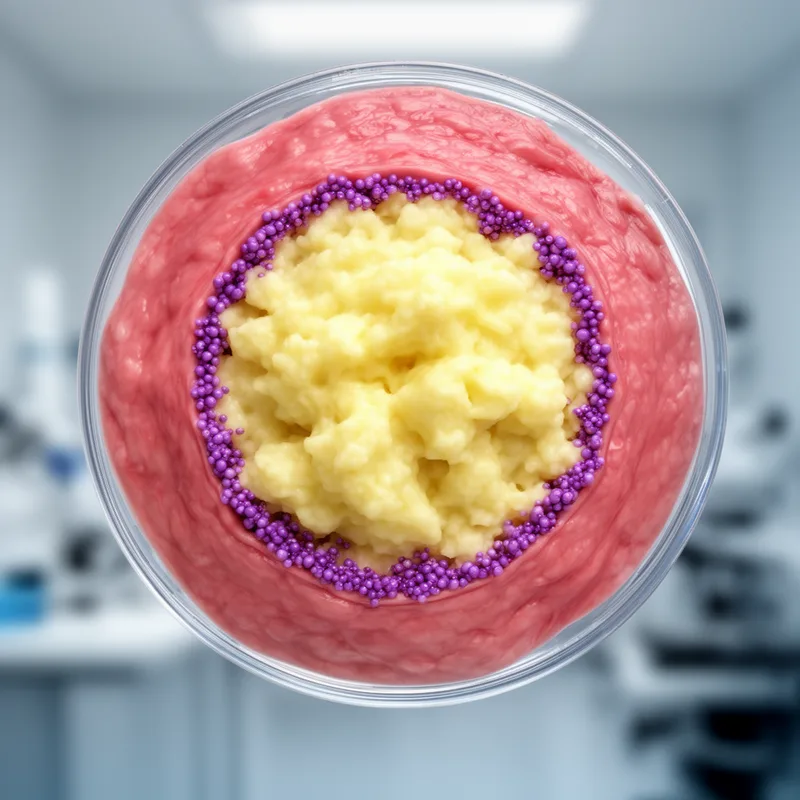
caseation
- noun
- /ˌkeɪsiˈeɪʃən/
- Specialized
- The doctor noted that the lung tissue showed signs of caseation during the examination, resembling a soft, cheese-like consistency.
Examples
-
A biopsy of the sinonasal mucosa demonstrated acute and chronic inflammation with diffuse granulomas that had few loci of caseation.
Academic text (2008) -
Among the usual pathologic processes that may produce nasosinus caseation with associated bone resorption are miasis (infestation from fly larvae) and aspergillosis.
Academic text (1996) -
After analyzing the patient’s biopsy, the pathologist identified extensive areas of caseation in the affected tissue sample.
-
In cases of tuberculosis, the infected lung tissue often exhibits caseation, which is characterized by its distinct texture.
How Extensive
- Specialized

- Specialized
Surface Forms
Morphology
caseation = caseate (opaque) = case + ation
The formation is from a specialized medical/adjectival base ('caseate') built on a Latin 'case-' meaning 'cheese' that is not a productive or familiar English morpheme, so learners cannot reliably derive the meaning.
Etymology
The word caseation comes from the Latin root caseus, which means 'cheese', and the related English word caseous also means 'cheese-like'. So, caseation describes tissue that becomes soft and looks like 'cheese', which is why doctors use the word for that form of tissue death.

