

carnivorous bat
- noun
- /ˌkɑrnɪˈvɔrəs bæt/
- The carnivorous bat uses its sharp senses to hunt insects in the dark.
Examples
-
Many carnivorous bats are crucial for controlling insect populations.
-
Unlike fruit bats, a carnivorous bat relies on echolocation to find its prey.
-
Many caves are home to several species of carnivorous bat.
-
The carnivorous bat swoops down to catch its prey.
-
The carnivorous bat uses its sharp senses to hunt insects in the dark.
-
Many carnivorous bats are crucial for controlling insect populations.
-
Unlike fruit bats, a carnivorous bat relies on echolocation to find its prey.
Synonyms

A small flying animal with fur and big ears that eats insects at night

Bats that mostly eat insects and use sound to find prey
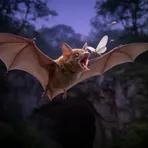
A bat that eats insects and lives in many parts of the world
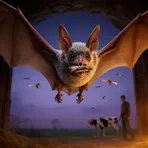
A bat that eats insects instead of drinking blood
Surface Forms
Morphology
The meaning is directly compositional: 'carnivorous' (feeding on other animals) modifies 'bat' (the flying mammal), so a learner who knows both words can infer it is a bat that eats animals (including insects). This adjective+noun pattern is a regular, cross-linguistic way to form biological categories, making the phrase immediately understandable to a B1 learner.
Etymology
Carnivorous bat comes from carnivorous meaning 'meat-eating' and bat meaning the animal. It gives a clear picture: these bats hunt and eat insects or small animals at night, so the name means 'a bat that eats meat'.

