

caricatural
- adjective
- /ˌkɛrɪˈkætʃərəl/
- The smoking cigarette, as a sign of female sexual availability and satiation, as employed in this illustration, appeared throughout caricatural imagery in the late nineteenth century.
Loading YouTube…
Watch on YouTubeSo of course this is slightly, this is kind of a caricatural case.
- So of course this is slightly, this is kind of a caricatural case.
Examples
-
In keeping with the call for modernity in art, Baudelaire had praised the efficacy of a caricatural image such as the poire for its ability to symbolize through analogy.
Academic text (1997) -
The caricatural nature of this approach is a measure of its ideological import.
Academic text (1998) -
In a more caricatural vein, Frisch conceived the character of Kabusch, an avatar of the eternally ineffectual and victimized schlemiel.
Academic text (1993) -
The comedian's caricatural portrayal of the politician made the audience laugh at the exaggerated mannerisms.
-
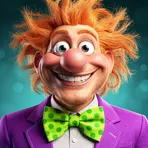
Her caricatural drawing captured the essence of the celebrity with its exaggerated features and playful colors.
-
In the film, the caricatural representations of the characters added a humorous twist to the otherwise serious storyline.
Synonyms
 10
4.2
10
4.2

Very exaggerated and silly like a cartoon
 5
4.6
5
4.6
Showing bright colors, simple shapes, and big, funny actions to look playful
 1
7.7
1
7.7
Copying something to make fun of it

Imitating something in a funny, exaggerated way to make fun of it
How Exaggerated

Surface Forms
Morphology
caricatural = caricature (transparent) = caricature + al
The adjective is formed regularly from 'caricature' with the suffix '-al' and its meaning is directly related to that noun.
Etymology
Caricatural comes from the Italian caricatura, which comes from caricare 'to load', because artists would 'load' a picture with extra features to make a face look larger or funnier. So, something caricatural is deliberately exaggerated or distorted to make a strong, often comic, effect.