
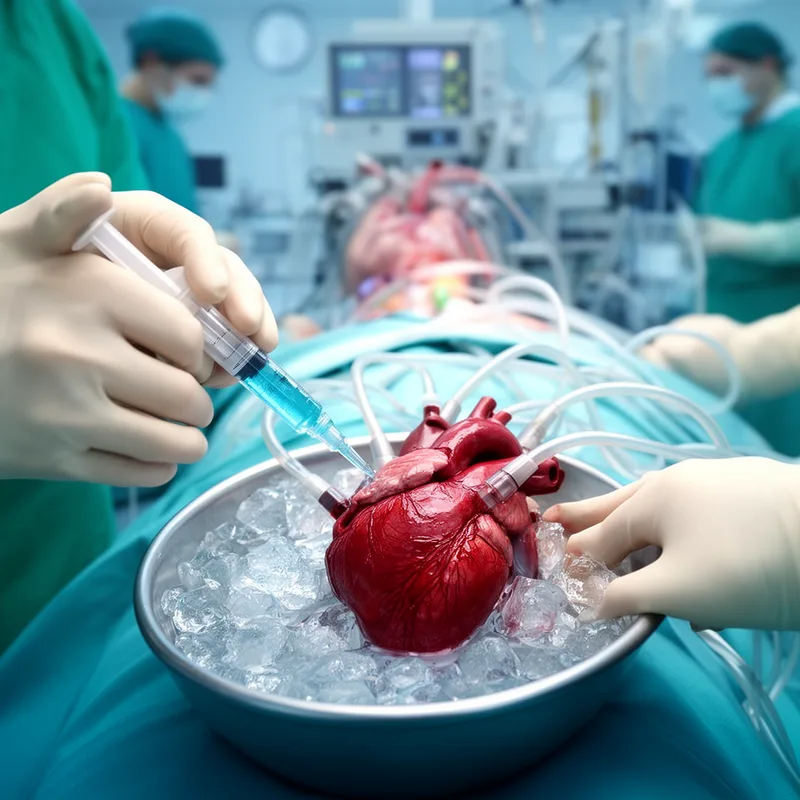
cardioplegia


 1
9.5
- noun
- /ˌkɑrdioʊˈpliːdʒə/
- Specialized
- To prevent damage during the procedure, doctors administered cardioplegia before starting the heart surgery.
Examples
-
One patient had developed possible meningitis after receiving a back injection of a different steroid, and another patient received a cardioplegia solution that is used during heart surgery.
Blog text (30) -
On Monday, the FDA raised concerns about two more drugs: a steroid called triamcinolone acetonide and another product called cardioplegia used during heart surgery.
Blog text (32) -
No infections tied to the bacterial contamination of the betamethasone or the cardioplegia solution have been detected, officials said.
Blog text (14) -
Lab tests found Bacillus halmapalus and Brevibacillus choshinensis in the cardioplegia solution.
Blog text (14) -
Ten different kinds of bacteria were detected in the drugs, including eight in separate lots of betamethasone, a steroid injection used to relieve severe itching, and two more types of bacteria found in a batch of cardioplegia solution used to stop the heart during surgery, the Food and Drug Administration reported.
Blog text (14) -
During surgery, the surgeon used cardioplegia to intentionally stop the patient's heart and protect the muscle.
-
The team prepared the cardioplegia solution carefully to ensure the heart remained safe during the operation.
Surface Forms
Morphology
cardioplegia = cardio + pleg + ia
The medical combining form 'cardio-' plus 'pleg' and '-ia' suggests a heart-related paralysis or stoppage condition, but the precise surgical meaning is specialized.
Etymology
The word cardioplegia comes from two parts: cardio- meaning 'heart' and -plegia meaning 'paralysis'. So it means 'heart paralysis', which is a clear image for the medical practice of intentionally stopping the heart during surgery to protect it.