
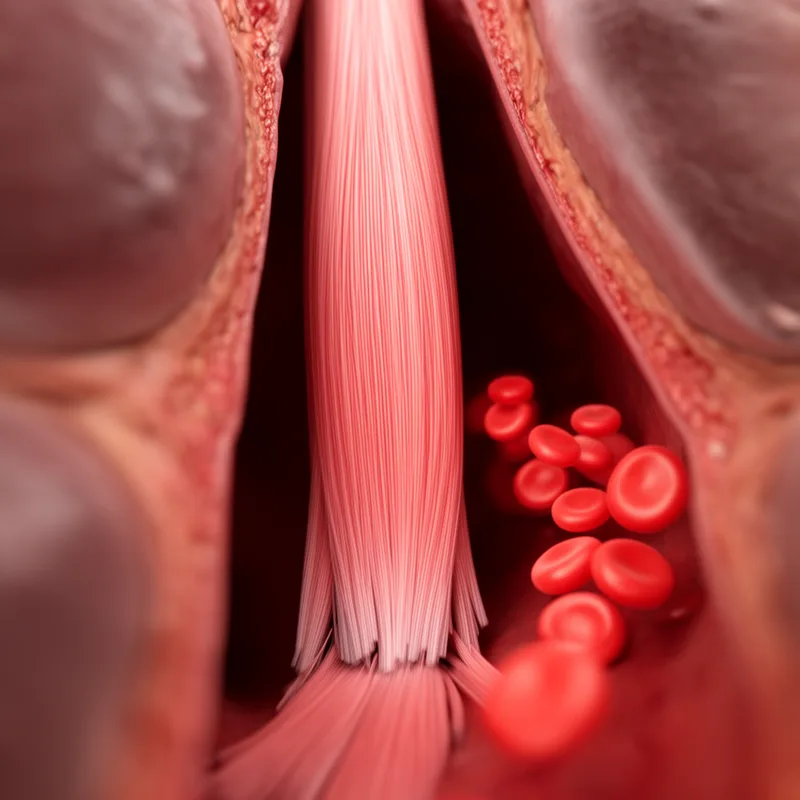
cardiomyocyte


 1
8.1
- noun
- /ˌkɑrdioʊˈmaɪəˌsaɪt/
- Specialized
- All of his cardiomyocyte regen rates are off the charts.
- cardiomyocytes from mice
- properties of cardiomyocytes
Examples
-
Furthermore, it is known that IL-18 is able to modulate cardiomyocyte excitability.
Academic text (2016) -
We found that cellular contractility, measured as a fraction of cardiomyocyte shortening, exhibited complex behavior.
Academic text (2016) -
However, we still have to investigate this hypothesis. Cardiomyocyte death versus survival: A possible evolutionary strategy?
Academic text (2016) -
Mechanical cardiomyocyte remodeling during the development of Chagas disease.
Academic text (2016) -
Thus, increased levels of IL-18 could help to explain altered cardiomyocyte functionality observed in both the acute and chronic phases of Chagas disease.
Academic text (2016) -
To our knowledge, no experimental evidence suggests alterations in Ito in cardiomyocytes from chagasic patients has been reported.
Academic text (2016) -
Increased levels of TGF- contribute to the reorganization of gap junctions in cardiomyocytes.
Academic text (2016) -
Interestingly, disruption of cardiomyocyte structure would release contractile proteins, such as troponin I, into the serum.
Academic text (2016) -
In summary, infection with T. cruzi appears to profoundly alter the contractile apparatus of cardiomyocytes.
Academic text (2016) -
The cardiomyocytes in the heart work together to ensure that blood is effectively pumped throughout the body.
Surface Forms
Morphology
cardiomyocyte = myocyte (semi-transparent) = cardio + myo + cyte
The word is a regular medical prefixation of 'myocyte' with 'cardio-' meaning heart, but the specialized combining forms make it less immediately transparent to general learners.
Etymology
Cardiomyocyte comes from Greek roots cardio- 'heart', myo- 'muscle', and -cyte 'cell'. So a cardiomyocyte is literally a 'heart-muscle-cell', which explains why it is the muscle cell that contracts to help pump blood.