
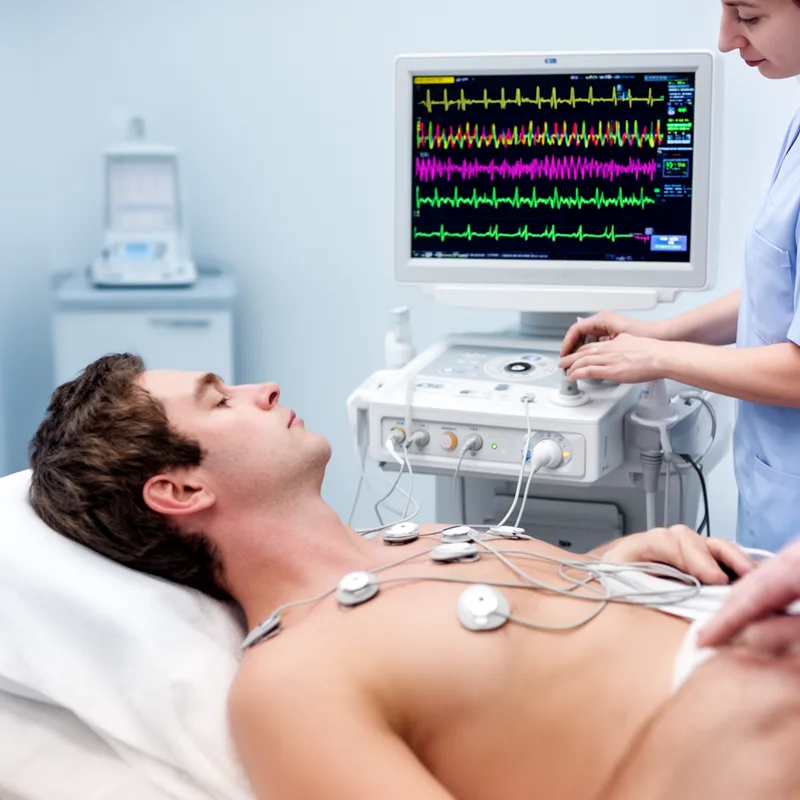
cardiography


 1
5.7
- noun
- /ˌkɑrdɪˈɑɡrəfi/
- Specialized
- Physiologic responses were determined with open-circuit spirometry, impedance cardiography, and auscultation.
Examples
-
The doctor used cardiography to analyze the patient's heart rhythm during the examination.
-
After the stress test, the cardiologist reviewed the cardiography results to diagnose any potential issues.
-
Using cardiography, the technician recorded the heart's electrical activity to check for abnormalities.
Synonyms
 1
6.3
A medical test that uses sound waves to make moving pictures of the heart
 1
6.1
A test that records the heart's electrical signals to check its activity
Surface Forms
Morphology
cardiography = cardio + graphy
The word is built from the combining forms cardio and -graphy, but both are technical bound morphemes, so an average B1 learner would not be able to infer the meaning from the parts.
Etymology
Cardiography comes from the Greek parts cardio- meaning 'heart' and -graphy meaning 'writing' or 'recording', the same idea you see in photograph. So cardiography is like 'writing' the heart, which explains why it means making a record of the heart's activity.