
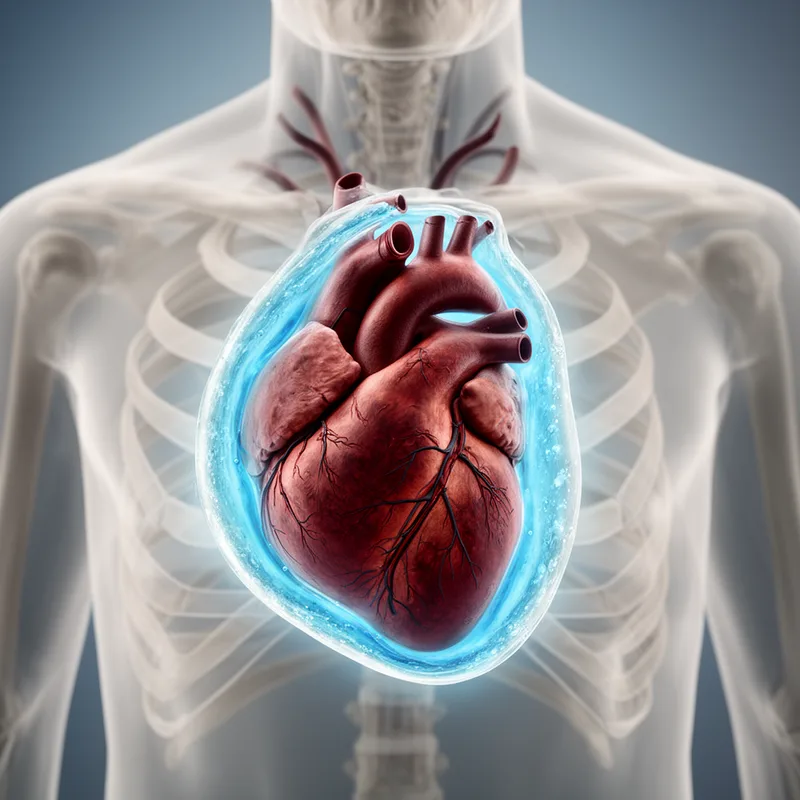
cardiac tamponade


 1
6.8
1
6.8
- noun
- /ˈkɑrdɪæk ˈtæmpəˌneɪd/
- Specialized
- Cardiac tamponade
Examples
-
In addition, in patients with acute cardiac tamponade, such as those with cardiac trauma, the amount of effusion may be quite small, and either the clinical or echocardiographic signs may be difficult to recognize due to the critical patients' condition.
Academic text (2016) -
Penetrating cardiac injuries usually cause severe cardiovascular compromise either from exsanguinating hemorrhage or cardiac tamponade.
Academic text (2007) -
Pericardial bleeding/cardiac tamponade
Academic text (2016) -
Echocardiography is an extremely helpful diagnostic tool for the diagnosis of pericardial bleeding/cardiac tamponade 61,62.
Academic text (2016) -
Cardiac tamponade is the accumulation of blood in the pericardium that occurs when a sufficient volume of blood develops enough pressure to hamper cardiac filling.
Academic text (2016) -
The complications of pneumomediastinum include cardiac tamponade, airway obstruction, pneumothorax, mediastinitis, and deep neck infection.
Academic text (2006) -
Gunshot or stab wounds, blunt trauma to the chest, accidental perforation, or broken ribs are frequent causes of traumatic cardiac tamponade.
Academic text (2016) -
The optimal echocardiographic modality for detection and evaluation of cardiac tamponade is the 2D echocardiography for visualization of pericardial blood effusion.
Academic text (2016) -
Hypotension and distended neck veins can be clear signs of cardiac tamponade.
-
A patient with cardiac tamponade may experience difficulty breathing due to pressure on the heart.
Surface Forms
Morphology
cardiac + tamponade
The adjective 'cardiac' transparently signals a heart-related condition, but 'tamponade' is a low-frequency, specialised medical noun (not defined here) whose meaning — compression of the heart by fluid in the pericardial sac — is not obvious to a B1 learner from general vocabulary. The compound is compositionally clear in form (modifier + medical head), yet it relies on specialised knowledge of 'tamponade', so the overall meaning is only partially predictable without prior medical exposure.
Etymology
Cardiac tamponade comes from the parts cardiac meaning 'heart' and tamponade meaning 'to plug' or 'to press down'. Imagine the heart with fluid around it pressing like a tight plug so the heart is 'squeezed' and cannot pump well — that's why the term means a dangerous build-up that compresses the heart.