
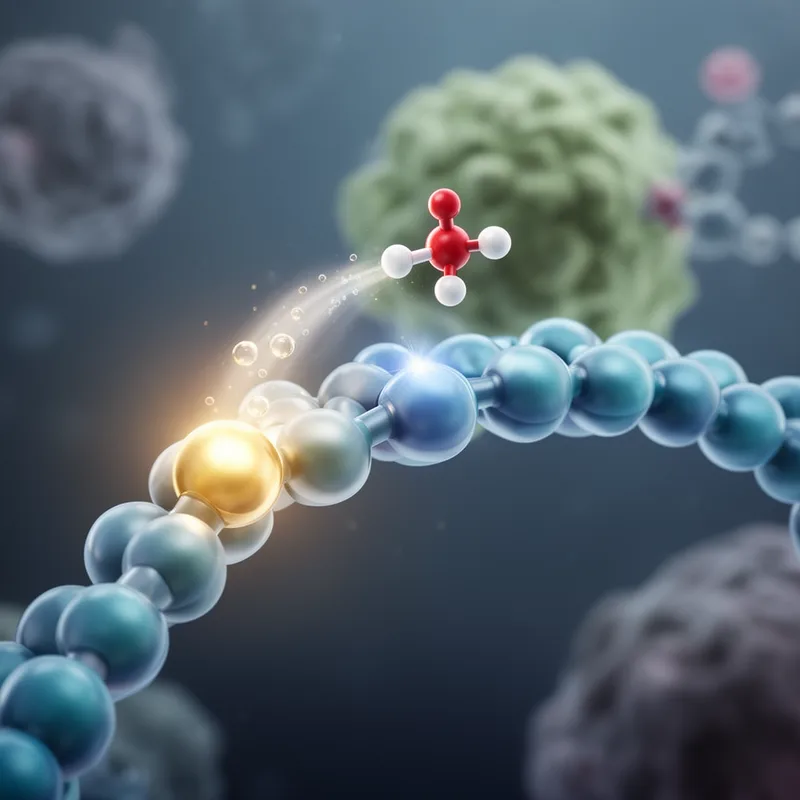
carboxylation


 1
9.1
- noun
- /kɑrˌbɑksəˈleɪʃən/
- Specialized
- The process of carboxylation adds a carboxyl group to the molecule, which is essential in many biochemical reactions.
Examples
-
So there's bicarbonate just like we saw when we did carboxylation reactions.
-
C1 carboxylation occurs mainly via pyruvate carboxylase in the mitochondria and not through phosphoenolpyruvate carboxylase (PEPC 1, 56026).
Blog text (18) -
We therefore developed a method by which the carboxylation status of the replaced osteocalcin is controlled.
Blog text (6) -
This method of controlling the carboxylation status of osteocalcin has been previously used to inactivate vitamin K-dependent clotting factors (33).
Blog text (6) -
The authors further suggested that carboxylation may occur in the mitochondria, and the concentrated CO2 could then diffuse to the chloroplast and be fixed by RubisCO.
Blog text (18) -
It is not a new idea for C4 metabolism to go through PYC1 and ME, but most models predict PEPC as the initial carboxylation step 46, 47, 49.
Blog text (18) -
During photosynthesis, carboxylation occurs when carbon dioxide is fixed into organic molecules in plants.
-
Researchers analyzed the carboxylation of proteins, which plays a crucial role in their function and stability.
Surface Forms
Morphology
carboxylation = carboxylate (opaque) = carboxyl + ation
This is a regular scientific derivation from 'carboxylate', but the technical base and the resulting process noun are not guessable for most learners.
Etymology
Carboxylation comes from carboxyl, which is a part of a molecule made from carbon and oxygen, and the ending -ation which means 'a process'. So carboxylation is the process of adding a carboxyl group to a molecule, which is exactly what the chemical reaction does.