
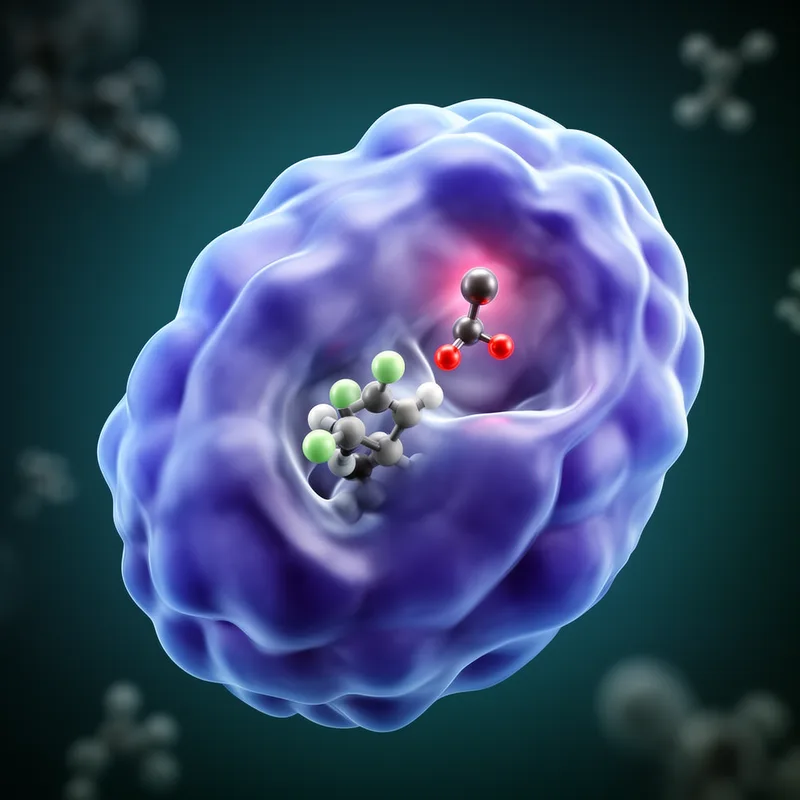
carboxylase
 1
8.8
1
8.8

- noun
- /kɑrˈbɑksɪleɪs/
- Specialized
- After extraction, we measured the effectiveness of carboxylase in catalyzing the addition of carbon groups in various substrates.
Examples
-
Scientists study carboxylase activity to better understand how certain plants fix carbon dioxide during photosynthesis.
-
In this sense, the CCM takes advantage of the C4 carboxylases' low K_m for inorganic carbon and affords the cell an additional mechanism to concentrate carbon.
Blog text (18) -
So this is exactly the same mechanism that we described before for pyruvate carboxylase in gluconeogenesis.
-
In fact, the activity and up-expression of acetyl-CoA carboxylase was a focus for previous studies, including the U.S. Department of Energy's Aquatic Species Program 15.
Blog text (18) -
So biotin bound in the active side of pyruvate carboxylase will utilize bicarbonate in the following way.
-
Based upon overall low gene expression levels for fatty acid synthesis, the results also suggest that the build-up of precursors to the acetyl-CoA carboxylases may play a more significant role.
Blog text (18) -
It has also been reported that both the vitamin K-dependent carboxylase activity and the biosynthesis of its substrates are enhanced by glucocorticoids (53, 54).
Blog text (6) -
C1 carboxylation occurs mainly via pyruvate carboxylase in the mitochondria and not through phosphoenolpyruvate carboxylase (PEPC 1, 56026).
Blog text (18) -
In a biochemical C4-CCM, relatively high-affinity carboxylases fix inorganic carbon to a C3 intermediate and form C4 compounds that can be transported to the chloroplast.
Blog text (18) -
The enzyme carboxylase plays a crucial role in the synthesis of fatty acids by adding a carboxyl group to the molecule.
Surface Forms
Morphology
Etymology
The word carboxylase breaks into carboxyl + -ase. The carboxyl part is a chemical part that has 'carbon' and 'oxygen', and -ase is the common ending for enzymes. So, a carboxylase is an enzyme that helps 'add' a carboxyl group, the part with 'carbon' and 'oxygen', to a molecule.