
carboxyl


 1
8.3
1
8.3
- adjective
- /kɑrˈbɑksɪl/
- Specialized
- OK, so there are three known isomers of hydroxy carboxyl benzene.
- carboxyl groups
Examples
-
Theoretically, EDC first binds with the asp or glu carboxyl groups to form the intermediate o-acylisourea.
Academic text (2018) -
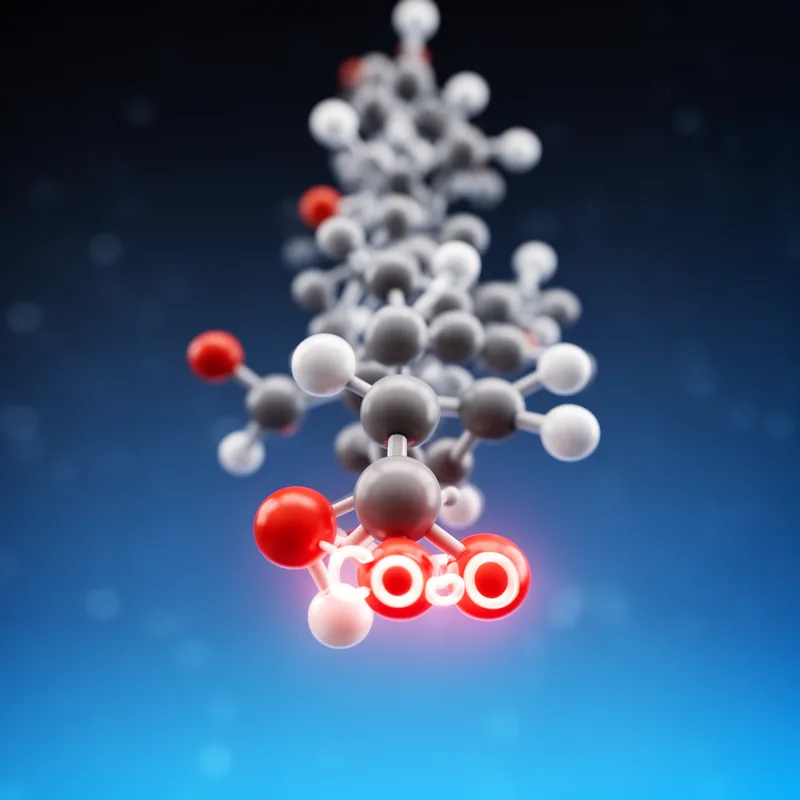
The next functional group that is important is the carboxylate group or the carboxyl group looks like this.
-
And therefore this carboxyl head loves to stick its head, to immerse its head in water.
-
In the case of EDC low-FNP, a short-range ordered structure was formed via inter- or intramolecular amide bonding among the free amine and carboxyl groups presented in the hydrophilic domains.
Academic text (2018) -
The carboxyl group is essential in the structure of many organic acids.
-
In organic chemistry, a molecule is classified as an acid if it contains a carboxyl functional group.
-
By adding a carboxyl group to the compound, we can significantly alter its chemical properties.
Synonyms
 1
8.7
1
8.7
Having the COOH group that appears in many acids
Compounds

- Specialized
A group of atoms with one carbon, two oxygens and one hydrogen that makes a molecule acidic
Surface Forms
Etymology
Carboxyl comes from the parts carbo- 'carbon', ox- 'oxygen', and the ending -yl 'group'. So used as an adjective, carboxyl means 'having' or 'relating to' the carbon-and-oxygen group -COOH, which changes a molecule's behavior, often making it more acidic.