
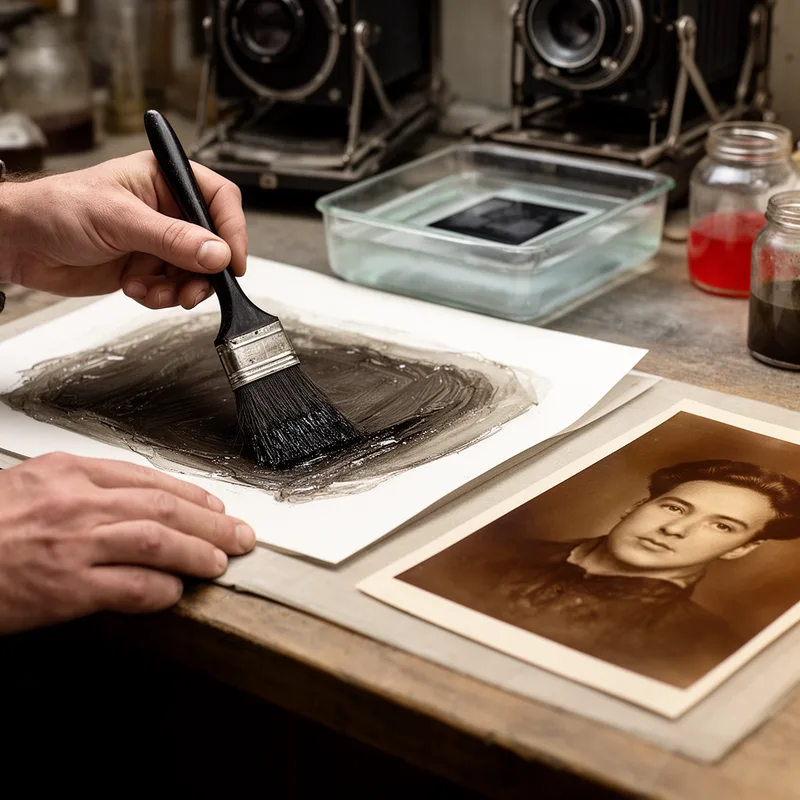
carbon process
- noun
- Archaic
- The carbon process was widely used in the 19th century for its permanence and rich image quality.
Examples
-
The museum's collection includes rare photographs made by the carbon process.
-
He learned to produce prints using the carbon process during his studies in historical photography techniques.
-
The carbon process produces stunning images.
-
Many artists prefer the carbon process for its depth.
-
The carbon process was widely used in the 19th century for its permanence and rich image quality.
-
The museum's collection includes rare photographs made by the carbon process.
-
He learned to produce prints using the carbon process during his studies in historical photography techniques.
Synonyms
A process that makes permanent photographic prints using carbon pigment

A printing process using carbon pigment that makes permanent prints
Surface Forms
Morphology
This is a specialized, historical photographic term referring to a particular printing technique rather than a general ‘process involving the element carbon.’ A B1 learner who knows 'carbon' (the chemical element) and 'process' (sequence of steps) would not be able to derive the specific photographic meaning from the constituents, so the expression is lexicalized and unpredictable.
Etymology
Carbon process comes from an old photo method where people coated paper with a thin, sticky layer mixed with dark pigment made from carbon, so the actual picture was the pigment stuck to the paper. That's why the term carbon process means this special 'printing method' known for rich, 'long-lasting' images.

