
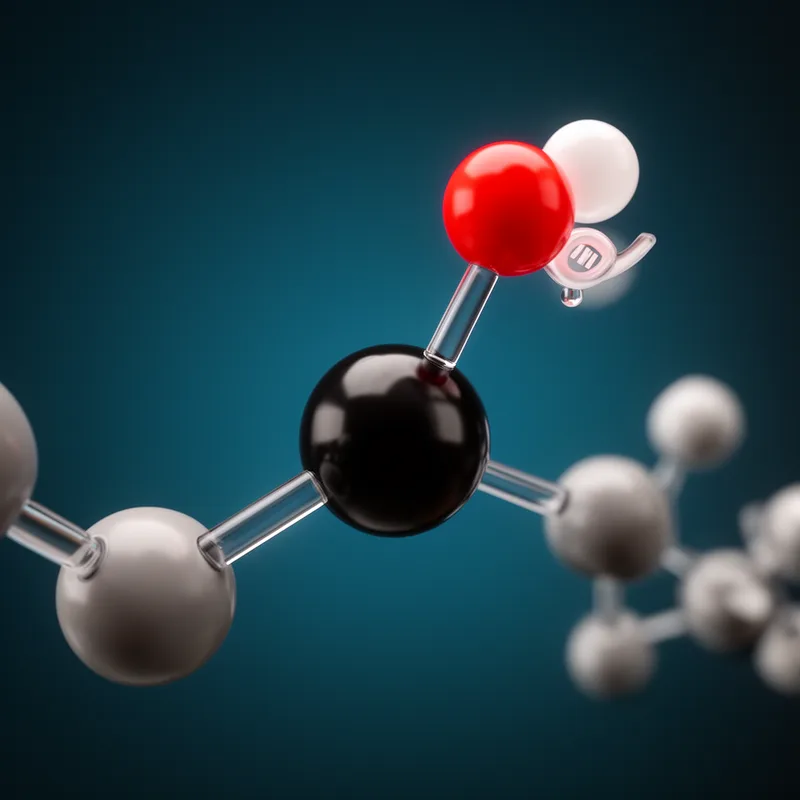
carbinol
- noun
- /ˈkɑːrbɪnɒl/
- Archaic
- In organic synthesis, the carbinol structure is often used as a building block.
Examples
-
Researchers studied the reactivity of the carbinol compound under different conditions.
-
The chemist synthesized carbinol in the laboratory.
-
The chemist added a carbinol group to the molecule to improve its properties.
-
Carbinol is essential for many reactions.
-
The chemist added a carbinol group to the molecule to enhance its reactivity in reactions.
-
In organic chemistry, the carbinol structure is vital for constructing more complex compounds.
-
Researchers conducted experiments to determine the stability of the carbinol compound in various environments.
Surface Forms
Etymology
The word carbinol names the −CH2OH group because carb- means 'carbon' and -ol is the usual ending for 'alcohol'. So a carbinol group is an 'alcohol part' attached to a carbon atom, which is why chemists call that structure carbinol.

