

capitellum
- noun
- /ˌkæpɪˈtɛləm/
- Specialized
- An injury to the capitellum can lead to limited range of motion in the arm, which is crucial for athletes.
Examples
-
Fractures of the articular surfaces (capitellum and trochlea)
Academic text (2003) -
Compression of the radial head against the capitellum commonly results in fractures due to shearing between the vertically aligned trabeculae and may also produce macroscopic damage to the capitellum.
Academic text (2007) -
In a supracondylar fracture, the capitellum is generally posterior to this line.
Academic text (2006) -
Photo (Black & White): Figure 5. (A) Displaced fracture distal humerus involving the capitellum and the trochlea.
Academic text (2003) -
Compression of the radial head against the capitellum commonly results in fractures due to shearing between the vertically aligned trabeculae and may also produce macroscopic damage to the capitellum.
Academic text (2007) -
The main problem after a radial head fracture is failure to gain full extension, probably caused by fibrosis of the anterior capsule of the joint after organization of hemarthrosis (3) and damage sustained by the capitellum of the humerus at the time of injury (2).
Academic text (2007) -
The doctor pointed out the capitellum on the X-ray, explaining its importance in elbow joint movement.
-
The surgeon carefully examined the capitellum during the procedure to ensure proper alignment of the bone.
Synonyms


Surface Forms
Etymology
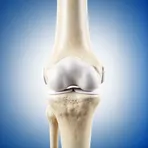
Capitellum comes from the Latin root capit-, from caput, meaning 'head', so it means a 'little head'. In anatomy the name fits well because a capitellum is a small rounded knob on a bone that acts like a tiny head and helps the arm bend.