
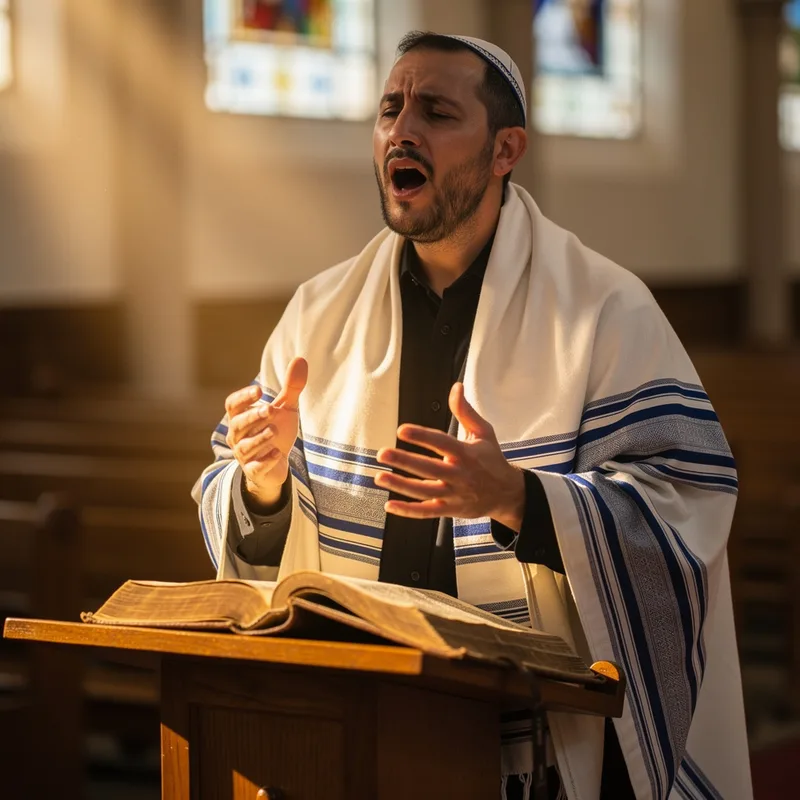
cantor
 69
7.7
69
7.7

- noun
- /ˈkæntər/
- His eyes were fixed on the spindles of the Torah that poked above the cantor's white shoulder.
Examples
-
After that, the cantor sang again, and Tuvia began to cry.
Fiction book (1996) -
My grandfather, a golden cantor, said he would die singing, and he did.
Academic text (2011) -
25 years he has been the cantor of our shul.
-
When the Torah study group assembled at the cantor's long mahogany table, no one sat at the head or the foot.
Fiction book (1997) -
At exactly two o'clock, Mrs. Cantor marched across the bima to the lectern.
Fiction book (1997) -
"Shloimie, the eighty-two-year-old chazzan (cantor), sighed deeply several times when he overheard the conversation.
Academic text (2001) -
The cantor led the congregation in song during the Friday evening service.
-
Every Sunday, the cantor would chant hymns that filled the church with joy.
-
During the wedding ceremony, the cantor sang beautifully, enhancing the sacred atmosphere.
Synonyms
 64
4.4
64
4.4
A person who leads musicians in groups like an orchestra or choir
 2
6.5
2
6.5
A person who leads a group of singers, often at church
 1
9.9
1
9.9
A person who leads songs and prayers in a synagogue, often singing alone
 1
7.1
1
7.1
A person who sings or chants to lead a group in a ceremony

A person who leads the singing of prayers in a synagogue

A person who leads prayers and sings in a synagogue
A person who leads singing and prayers in a Jewish synagogue

A person who leads the singing in a church choir

A person who sings or leads religious songs during a church service
How Responsible

Surface Forms
Etymology
The word cantor comes from the old Latin word cantare, which means 'to sing', and it originally meant a 'singer'. So a cantor today is the person who leads the singing or chanting in a church or synagogue.