

canto
 1
9.3
1
9.3

- noun
- /ˈkæn.toʊ/
- Literature
- The third canto of the Divine Comedy of the great poet Dante Alighieri!
- canto of Inferno
- canto of Dante
- third canto
Loading YouTube…
Watch on YouTubeThese lines are for the ultimate Canto, whatever AI may write in the interim.
- These lines are for the ultimate Canto, whatever AI may write in the interim.
- And so that is described in the Cantos and that's what's going to be happening.
Examples
-
Dante meets him in Canto 15 of the Inferno, in the section of hell where sodomy is punished.
Academic text (1991) -
The end of canto three features Darwin's most extended and far-fetched metaphor.
Academic text (1993) -
These lines are for the ultimate Canto, whatever AI may write in the interim.
-
And now that's how the canto ends and we start with the next canto.
-
It's entitled From the Last Canto of Paradise, From the last Canto of Paradise.
-
For his final lecture, he spoke on the last canto of Dante's Inferno, a classy way to go out.
Academic text (2011) -
Reynolds discusses two more episodes in Ulysses where Joyce refers to Canto 15 of the Inferno.
Academic text (1991) -
In the "Canto a Bolivar," it is Huaina-Capac who orates; the voice of the Inca dominates the other figures.
Academic text (2018) -
"The Canto of Ulysses" in Primo Levi's Survival in Auschwitz is an extreme example of a modern katabasis.
Academic text (2010) -
In the third canto of the epic, the hero faces a daunting challenge.
Compounds
- Specialized
1
9.1
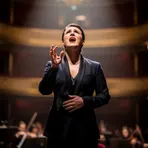
A smooth, lyrical way of singing in opera that shows a pure voice and quick, skillful notes
How Long

Surface Forms
Etymology
Canto comes from the Latin cantus meaning 'song' and the verb cantare meaning 'to sing', so a canto was originally a part of a long poem that could be 'sung' aloud — think of each canto as a little song inside an epic.