
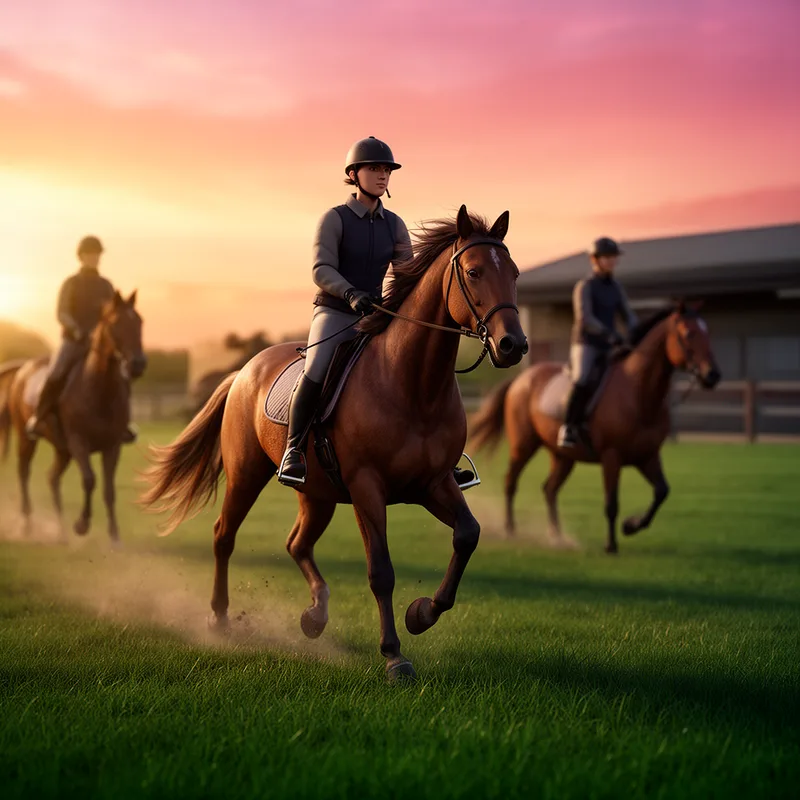
cantering
- adjective
- /ˈkæn.tər.ɪŋ/
- Specialized
- The cantering horse moved gracefully across the field.
Examples
-
The cantering horses moved gracefully across the open field.
-
A group of cantering riders approached the stable at sunset.
-
The movie showed a cantering cavalry charging toward the enemy lines.
-
A cantering pony passed by the stable.
-
A group of cantering riders approached the stable at sunset.
-
The cantering horses moved gracefully across the open field.
-
A cantering pony passed by the stable.
Antonyms


Compounds

- Literature
A steady three-beat pattern like a horse's gallop used in music or dance
How Fast

Surface Forms
Morphology
Etymology
Cantering comes from the word canter, which some people connect to the Latin cantare meaning 'to sing' and others to the old phrase 'Canterbury gallop' used for a steady pace for travelers. Both ideas give a clear image: the canter is a steady, three-beat rhythm like a soft song, so cantering means moving faster than a trot but slower than a gallop.