
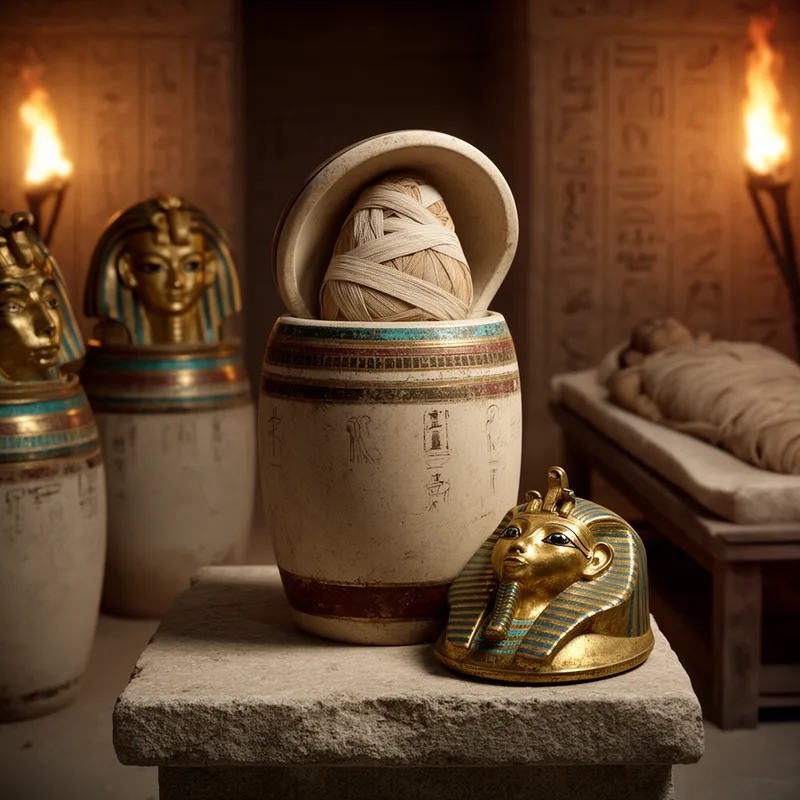
canopic vase
- noun
- /kəˈnɒpɪk veɪs/
- Specialized
- Each canopic vase was dedicated to a specific organ and protected by a different deity.
Examples
-
The museum displayed a beautifully decorated canopic vase in its Egyptian antiquities section.
-
Archaeologists discovered a set of canopic vases during the excavation of the tomb.
-
The canopic vase was beautifully decorated.
-
Many canopic vases were found in the tomb.
-
Archaeologists discovered a set of canopic vases during the excavation of the tomb.
-
Each canopic vase was dedicated to a specific organ and protected by a different deity.
-
The museum displayed a beautifully decorated canopic vase in its Egyptian antiquities section.
Synonyms

 1
9.9
1
9.9

A jar with a lid used in ancient Egypt to hold the organs removed from a dead body
Surface Forms
Morphology
canopic + vase
The adjective 'canopic' is a specialized, culture-specific term tied to ancient Egyptian funerary practice and does not transparently indicate ‘holding internal organs’; while 'vase' denotes a container, that alone does not reveal the specific ritual function. Understanding this MWE requires encyclopedic/cultural knowledge (what 'canopic' refers to) rather than simple composition of constituent meanings, so a B1 learner who only knows the word forms would not reliably infer the full meaning.
Etymology
Canopic vase names the jars ancient Egyptians used to hold the organs removed when making a mummy. Each vase held one organ and was often shown with a god's head to protect it, so the strong image of a small jar keeping an organ helps explain why the term means a jar used to keep body parts for the 'afterlife'.