
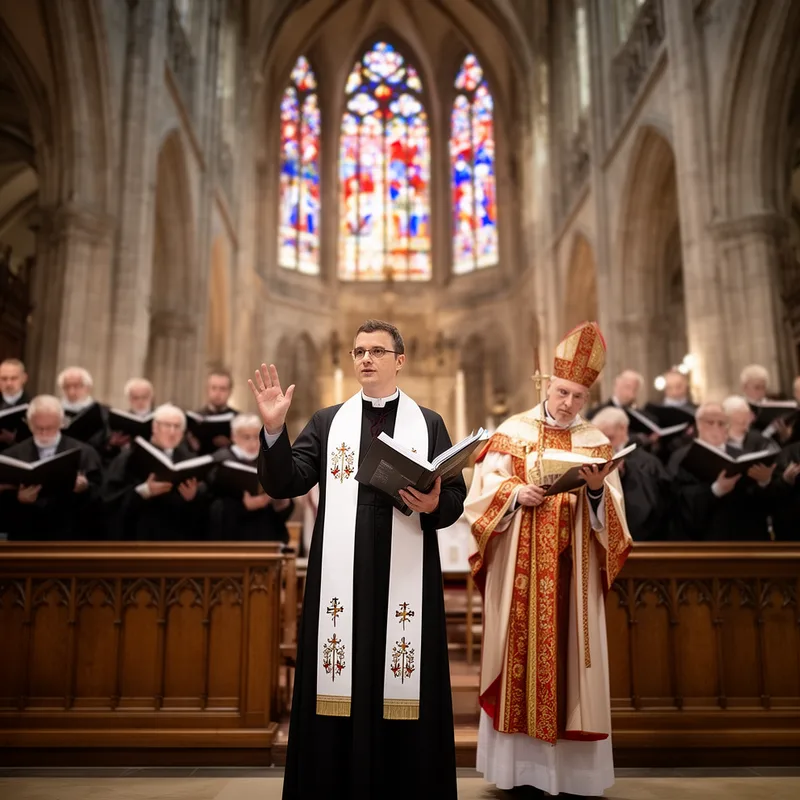
canonistic
- adjective
- /ˌkænəˈnɪstɪk/
- Formal
- Her canonistic responsibilities included organizing the choir and assisting with services.
Examples
-
A canonistic perspective is essential when interpreting the rules of the church chapter.
-
The bishop sought canonistic advice before making changes to the cathedral's traditions.
-
The canonistic principles guide the church's decisions.
-
Many scholars study canonistic texts to understand church law.
-
The bishop sought canonistic advice before making changes to church practices.
-
Her canonistic duties included organizing the choir for the weekly services.
-
A thorough understanding of canonistic law is crucial for church administration.
Synonyms

Relating to the group of priests who run a cathedral or large church
Relating to the group of priests who manage a cathedral
How Clerical


Surface Forms
Morphology
Etymology
Canonistic comes from canon, which comes from an old Greek word kanon meaning 'rule' or 'measuring stick'. A helpful way to remember this sense is to think of a canon as a church officer who lives by that rule, so canonistic means 'about a canon's office or duties'.