
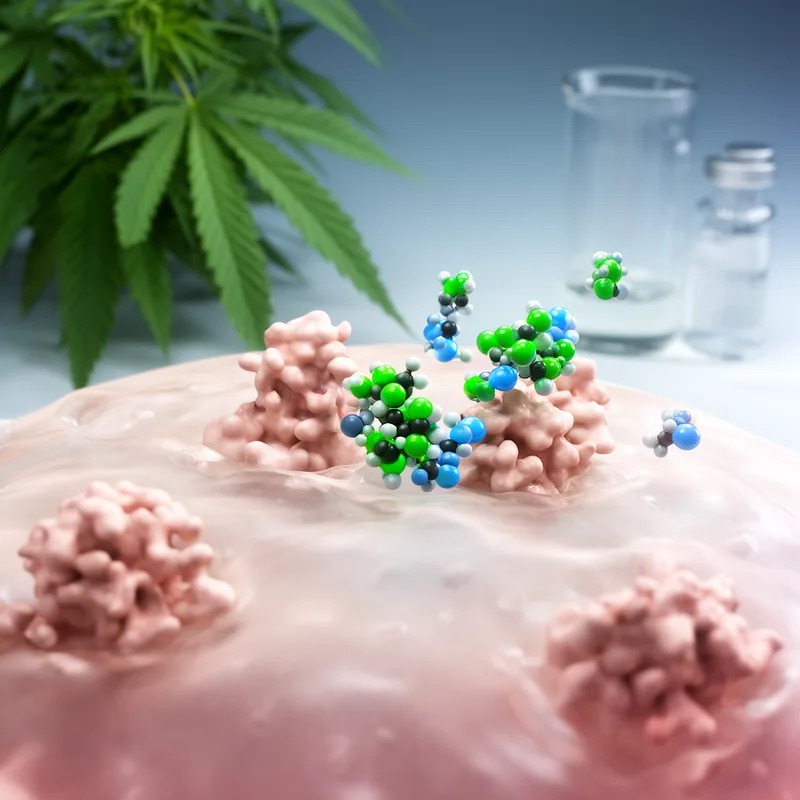
cannabinoid
 5
7.2

- noun
- /kəˈnæbəˌnɔɪd/
- Specialized
- Synthetic cannabinoids are often available in head shops, tobacco stores, and over the Internet.
- synthetic cannabinoids
- cannabinoid receptor
- medical cannabinoids
Loading YouTube…
Watch on YouTubeThat some of these natural or endogenous cannabinoids were increased in amount.
- That some of these natural or endogenous cannabinoids were increased in amount.
- These are effectively they're our brain's own cannabinoids.
- FDA didn't like the synthetic cannabinoids.
- They are not being as strongly driven by endogenous cannabinoids, but by ingestion of THC and or CBD.
- Like how, how do you discover the cannabinoids in, in such a sort of ancient location?
- And there is intriguing research in the area of of these cannabinoids.
Examples
-
Specifically, cannabidiol (CBD) is increasingly understood as a cannabinoid that may attenuate some of THC's adverse effects.
Academic text (2017) -
"Do you know that anandamide, one of the active ingredients in chocolate, is a cannabinoid?
Fiction book (2001) -
It's just the amount of certain cannabinoids within the plant that has been made legal or illegal in the eyes of the federal government.
-
Cannabis contains a range of cannabinoids.
Academic text (2018) -
Other cannabinoids besides THC may influence the adverse effects of cannabis.
Academic text (2017) -
Cannabinoids are cannabinoids that interact with specific receptors in our body to produce various effects.
-
Many researchers are studying how cannabinoids can be used to relieve chronic pain in patients.
-
The plant contains several cannabinoids, which can provide medicinal benefits when consumed.
Surface Forms
Morphology
cannabinoid = cannabis (transparent) = cannabin + oid
Denotes a compound related to or characteristic of cannabis (cannabis + -oid), a direct nominal formation whose referent (a substance) is predictable from the parts for learners familiar with 'cannabis'.
Etymology
Cannabinoid mixes cannabis (the hemp plant) with the ending -oid meaning 'like', the same ending you see in humanoid. So a cannabinoid is literally a chemical 'like' those from cannabis, which is why these compounds act on the body's cannabinoid system.