
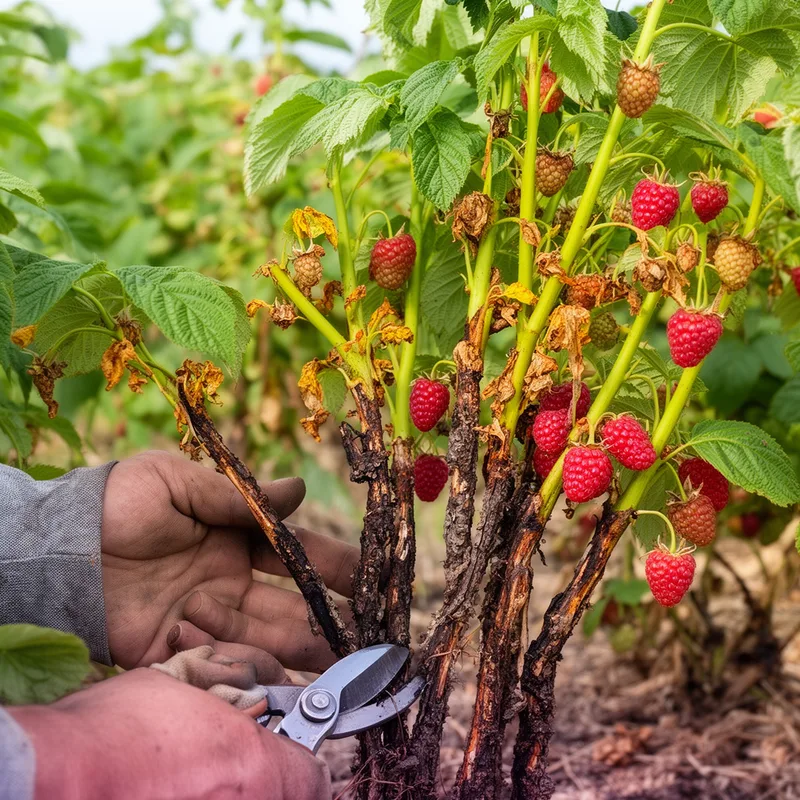
cane blight
- noun
- Specialized
- The symptoms of cane blight include wilting and dieback of the plant's canes.
Examples
-
Proper pruning and disposal of infected stems can help control cane blight.
-
Farmers took extra precautions to prevent cane blight from spreading in their raspberry fields.
-
Farmers are worried about cane blight affecting their crops.
-
The cane blight has spread rapidly this season.
-
Farmers took extra precautions to prevent cane blight from spreading in their raspberry fields.
-
Proper pruning and disposal of infected stems can help control cane blight.
-
The symptoms of cane blight include wilting and dieback of the plant's canes.
Synonyms
 7
7.3
7
7.3

A plant disease that makes leaves and stems die without rotting

A plant disease where a fungus causes stems to rot and die
Surface Forms
Morphology
The compound is directly compositional: 'blight' denotes a plant disease and 'cane' refers to the plant stem, so 'cane blight' straightforwardly means a disease affecting the canes. The noun+noun pattern 'X blight' is common and predictable, so a B1 learner who knows both constituents would readily infer this meaning from context.
Etymology
Cane blight comes from the words cane (the long 'stem' of berry bushes) and blight (a fast plant disease). It creates the image of those stems turning brown and dying, so cane blight means a disease that makes the canes 'die back' and lowers the fruit crop.