
candidiasis


 1
8.5
1
8.5
- noun
- /ˌkændɪˈdaɪəsɪs/
- Specialized
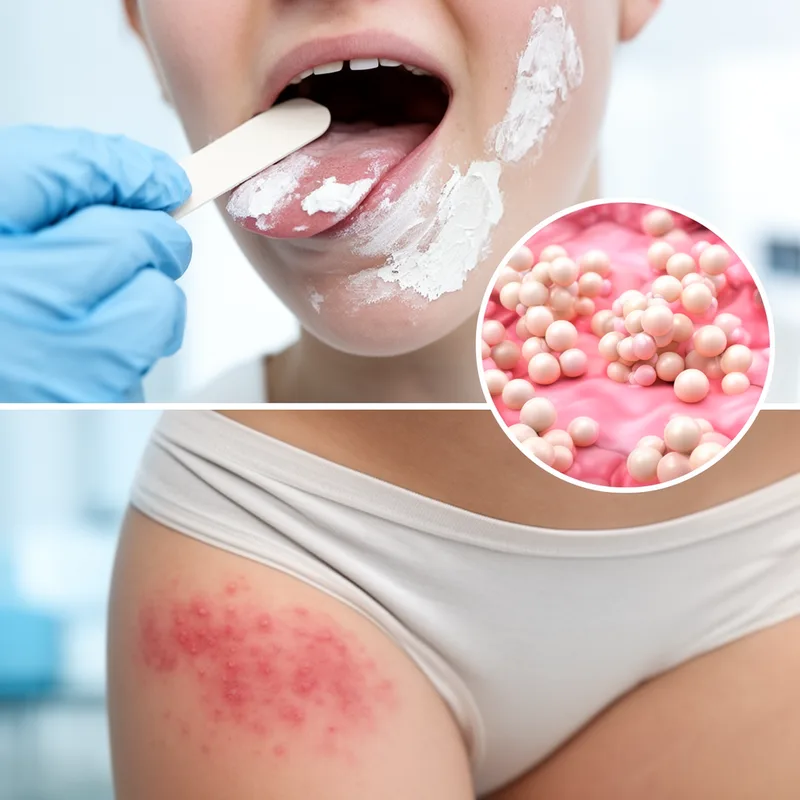
- Oral candidiasis can cause discomfort and white patches in the mouth.
- vulvovaginal candidiasis
- vaginal candidiasis
- pulmonary candidiasis
Examples
-
Our findings support the data of other researchers regarding the high incidence of pulmonary candidiasis; Candida was the most common fungus isolated in lung tissue in our series, being present in 48% of cases.
Academic text (2007) -
Notably, a significantly lower incidence of vaginal candidiasis occurred among women who received telithromycin for 5 days than in those who received amoxicillin/clavulanic acid, which is of clinical relevance in view of the frequency with which this adverse effect occurs with broad-spectrum antibiotics.
Academic text (2003) -
Neutropenia is an important risk factor for pulmonary candidiasis.
Academic text (2007) -
Neutropenia was most commonly associated with pulmonary candidiasis.
Academic text (2007) -
Autopsy reports of patients with pulmonary candidiasis failed to reveal any clinical predictors for this diagnosis.
Academic text (2007) -
In the past, only laryngeal candidiasis involving vestibular folds has been described in Down syndrome patients.
Academic text (2008) -
Use primarily for vulvovaginal candidiasis and various skin and mucous membrane Candida infections.
Academic text (2005) -
Patients should be treated for opportunistic oral infections in light of the replacement of normal oral flora with cariogenic bacteria and candidiasis.
Academic text (1999) -
The early symptoms of Type 1 diabetes may be misdiagnosed as respiratory infections, simple candidiasis, gastroenteritis, or urinary tract infections.
Academic text (2012) -
The local side effects of intranasal steroid therapy—primarily dry nose, crusting, bleeding, and candidiasis—have been well described in the literature.
Academic text (1998)
Synonyms

An infection caused by a common fungus called Candida that often affects the mouth or genitals

An infection by yeast that often makes a white coating in the mouth
Surface Forms
Morphology
candidiasis = Candida (semi-transparent) = candida + iasis
Formed from the genus name 'Candida' plus the medical suffix '-iasis' meaning a disease; the suffix is technical and may be unfamiliar to average learners.
Etymology
The word candidiasis comes from the yeast name Candida, which comes from the Latin candidus meaning 'white'. Because the infection often makes white patches, a helpful way to remember it is that candidiasis is a 'white' yeast infection and is related to the English word candid, which originally meant 'white'.