
camelid


 1
7.9
- adjective
- /ˈkæməˌlɪd/
- Specialized
- The researchers discovered a new camelid sculpture that highlighted the cultural significance of these animals in ancient societies.
Examples
-
In our study, production of infectious virus particles was seen in goat lung and kidney cells and in camelid kidney cells.
Academic text (2014) -
The results of our study suggest that investigations into the MERS-CoV animal reservoir and intermediate host should focus on caprid (e.g., goats) and camelid hosts, and we identified several new cell lines for use in virus isolation studies.
Academic text (2014) -
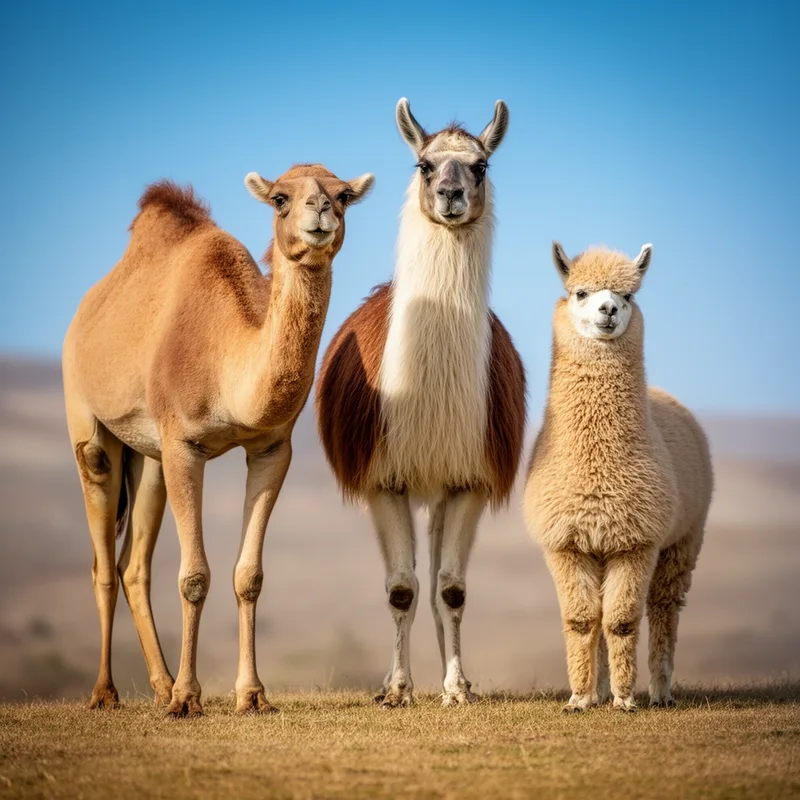
In the Andes, the camelid population includes llamas and alpacas, which are essential for local agriculture.
-
The museum has a special exhibit dedicated to the camelid family, showcasing the differences between camels, llamas, and alpacas.
Surface Forms
Morphology
Etymology
Camelid comes from the common animal name camel plus the ending -id, which people use to mean 'related to'. So something described as camelid is 'related to camels and their family', like llamas and alpacas.