
to calve
 2
9.6
2
9.6

- verb
- /kæv/
- Specialized
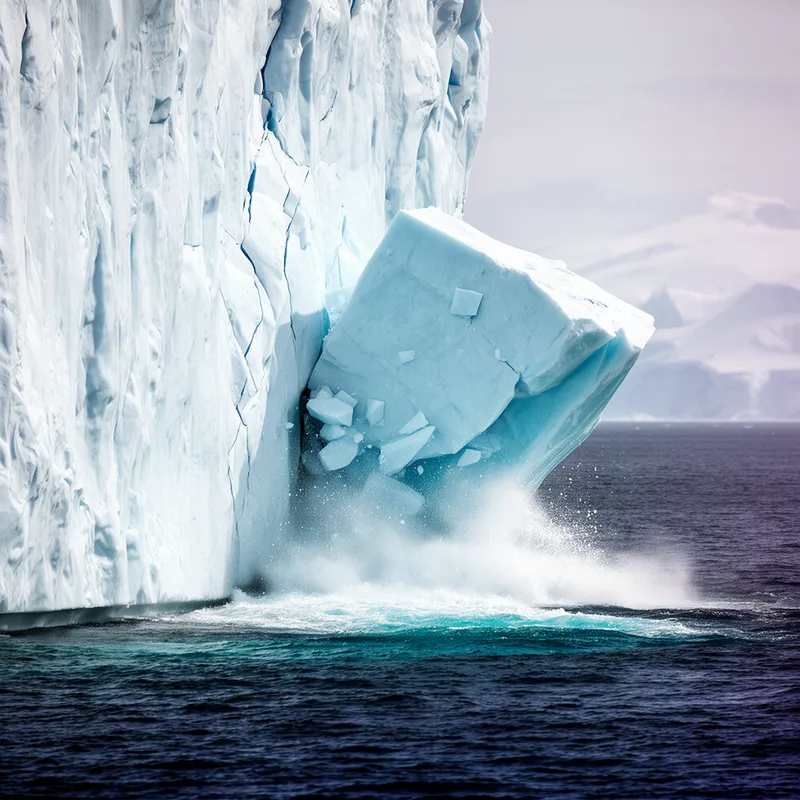
- Your children will see firsthand the unique videos of some of the world's largest glaciers retreating, deflating, and calving into the oceans.
- calve icebergs
- calve glaciers
- calving areas
Examples
-
The glaciers are calving spectacularly as the temperature rises during the summer.
-
Natives describe a calving period from April through August (Huntington, 2000), and they indicate that calving areas include most of the areas where belugas concentrate.
Academic text (2000) -
Glaciers are supposed to calve.
Blog text (15) -
The glaciers are calving right next to camp!
-
I've seen some of the time-lapse glacier videos; they are brilliant and compelling. Everyone should see how glaciers calve.
Blog text (15) -
In Antarctica, giant icebergs have calved and part of the Larsen ice shelf has disintegrated.
Blog text (34) -
Glaciers flowing down the steeper perimeter of Greenland calve small, rugged icebergs.
Academic text (2000) -
In some instances, bright red spots or streaks along the edge of the continent show where icebergs calved or ice shelves disintegrated, meaning the satellite began seeing warmer ocean water where there had previously been ice.
Blog text (34) -
Although Antarctica warmed around the perimeter from 1982 to 2004, where huge icebergs calved and some ice shelves disintegrated, it cooled closer to the pole.
Blog text (34) -
Around the coasts, the undulating sameness of the shield area is also interrupted, this time by glaciers that calve icebergs and that have cut vertical cliffs and deep fjords.
Academic text (1991)
Surface Forms
Etymology
Calve is also used for glaciers when a piece of ice 'breaks off', and this meaning comes from the same root as calf, meaning 'a baby'. People thought the ice chunks were like little 'babies' leaving the mother glacier, so to calve is to 'break off' a chunk of ice.