
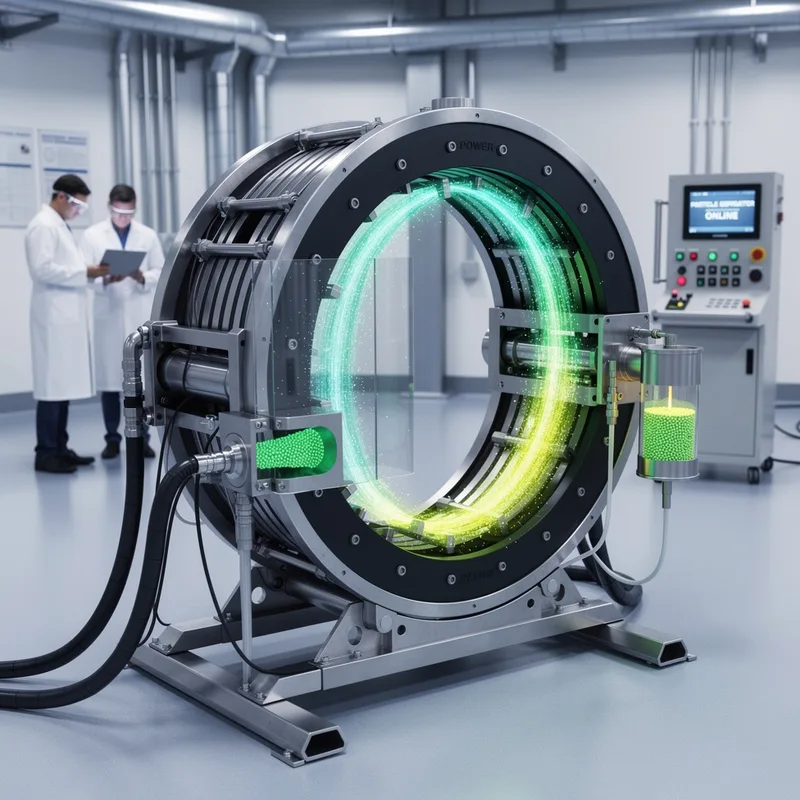
calutron
 1
9.9

- noun
- /ˈkæl.jʊ.trɒn/
- Specialized
- The calutron story starts around 1940 at Cornell University.
Examples
-
The calutron's separation method was based on electromagnetic mass spectrometry.
Academic text (2006) -
The calutron was a temperamental piece of equipment.
Academic text (2006) -
The second calutron innovation was the use of multiple beams.
Academic text (2006) -
An Austrian company gave Iraq calutrons for enriching uranium.
Blog text (26) -
Now that the device had achieved its objective, Ernest Lawrence wished to give recognition to the University of California by using the name calutron for the apparatus developed to separate P from Q.
Academic text (2006) -
This service has been provided at cost for almost 60 years through the use of calutrons in the pilot units and Beta tracks at Y-12, all operated by Oak Ridge National Laboratory.
Academic text (2006) -
In the war years, the Berkeley cyclotron program was interrupted so that the magnets could be used for the development of apparatus to be used in the Oak Ridge calutrons.
Academic text (1993) -
A calutron is a device used to separate isotopes of uranium for enrichment purposes.
-
The scientist explained how the calutron works to isolate different uranium isotopes.
-
To achieve uranium enrichment, they utilized a calutron to separate the isotopes effectively.
Surface Forms
Etymology
The word calutron was made from Cal, meaning 'California', and from cyclotron, the name of a physics machine. It was the name given to a machine at the University of California that separated different kinds of uranium atoms, so a calutron is a device used to separate uranium.