
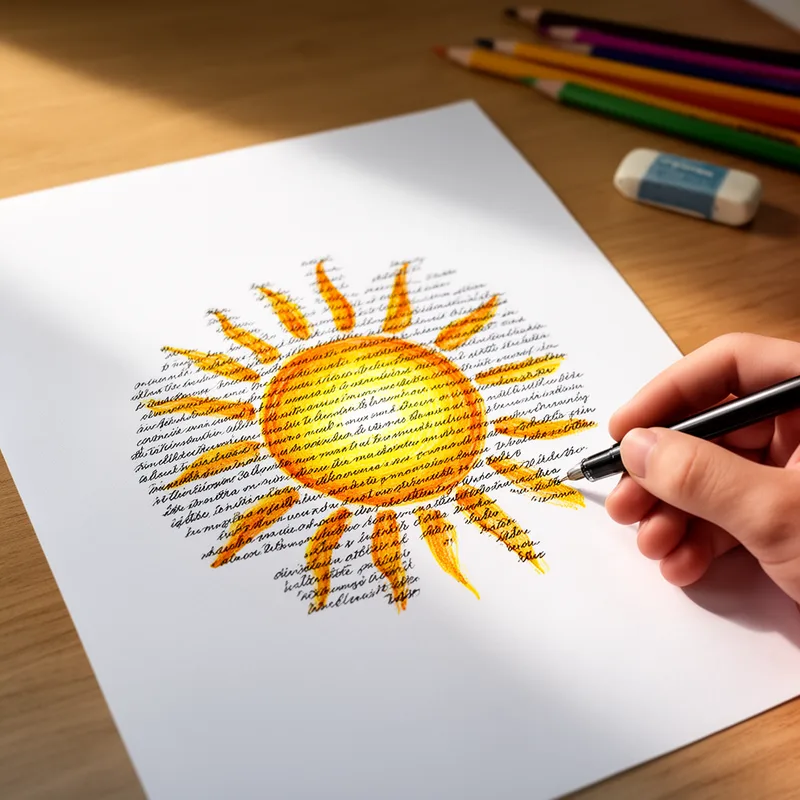
calligram


 1
9.1
- noun
- /ˈkælɪɡræm/
- Literature
- A calligram of a tree was created using the words associated with nature and growth.
Examples
-
Arabic calligrams of people and birds are common popular arts of North Africa that are available and sometimes reproduced in Senegal.
Academic text (2002) -
The artist crafted a calligram that resembled a fish using verses about the sea.
-
See his introduction to Calligram: Essays in the New Art History from France, Cambridge, 1988, xviii and xxi.
Academic text (1992) -
Foucault writes, "Pursuing its quarry by two paths, the calligram sets the most perfect trap."
Academic text (2015) -
Embedded even within his optimistic analysis of the calligram's abilities is the assumption of word and picture's ontological divide.
Academic text (2015) -
However, Foucault finds hope in calligrams (pictures composed of words), believing that they bring "a text and a shape as close together as possible" by simultaneously invoking and conflating written and visual modes of communication.
Academic text (2015) -
In her poetry book, she included a calligram that visually represented the themes of her poems.
Surface Forms
Etymology
Calligram comes from Greek parts calli- 'beautiful' and -gram 'letter'. So a calligram is 'beautiful writing' made into a picture, where the words or letters are arranged to form the shape of what the text describes, a bit like the art of calligraphy.