
calcium bicarbonate
- noun
- /ˈkælsiəm baɪˈkɑːrkəneɪt/
- Specialized
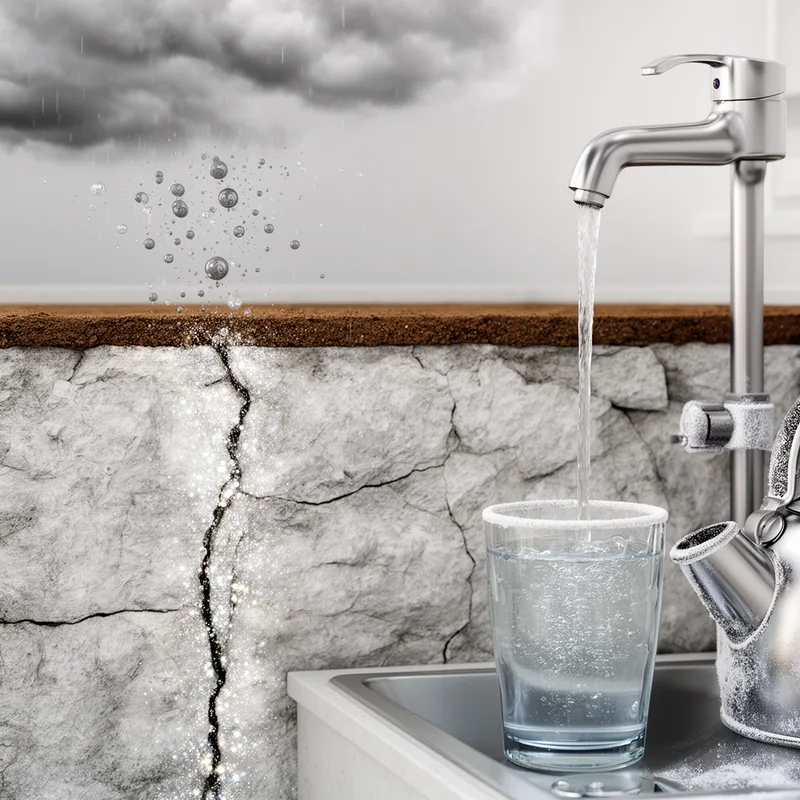
- When limestone is dissolved in carbonated water, it produces calcium bicarbonate and contributes to increased water hardness.
Examples
-
Calcium bicarbonate forms when rainwater absorbs carbon dioxide and reacts with limestone.
-
Boiling water removes calcium bicarbonate, which helps soften hard water.
-
High levels of calcium bicarbonate in tap water can make it taste slightly bitter.
-
The solution contains calcium bicarbonate and other minerals.
-
Is calcium bicarbonate present in your water supply?
-
Calcium bicarbonate is often used to neutralize acidity in swimming pools and improve water quality.
-
Water with high levels of calcium bicarbonate may require treatment to prevent scaling in pipes.
Surface Forms
Morphology
This is a systematic chemical name: combining 'calcium' (the element) and 'bicarbonate' (the bicarbonate salt/ion) yields the calcium salt of bicarbonate (Ca(HCO3)2). Chemical naming is compositional and cross-linguistically consistent, so a B1 learner who knows both constituents can infer it is a calcium-containing bicarbonate compound and its relation to water hardness.
Etymology
Calcium bicarbonate forms when rainwater absorbs carbon dioxide and slowly dissolves rock like limestone, so the water carries tiny bits of calcium away as bicarbonate. That's why calcium bicarbonate is the mineral that makes water feel 'hard'.

