
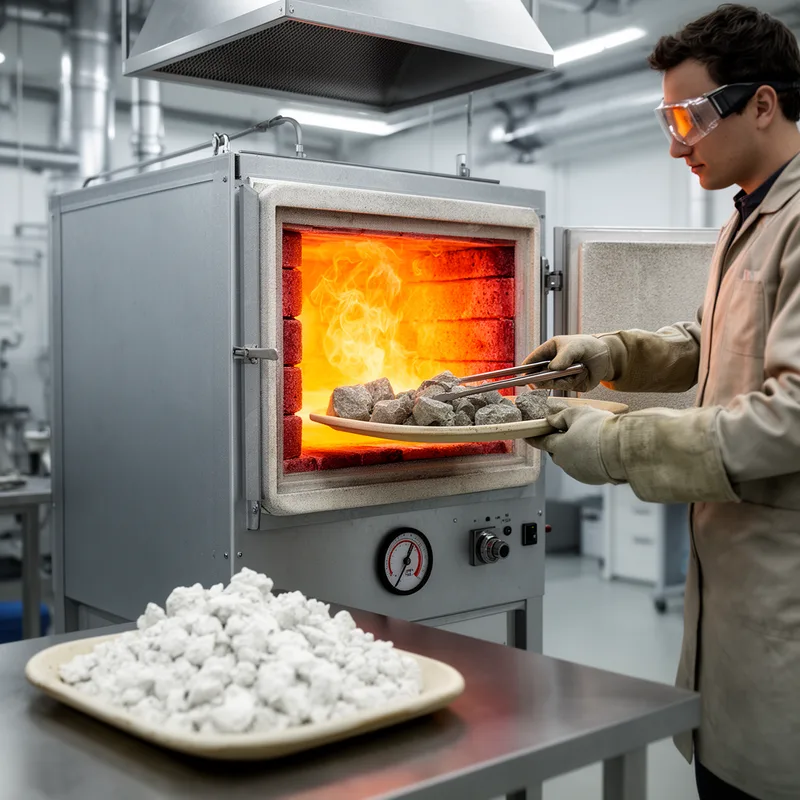
calcinator
- noun
- /ˈkæl.sɪ.neɪ.tər/
- Specialized
- Technicians monitored the temperature inside the calcinator to ensure proper calcination.
Examples
-
A calcinator is essential for producing quicklime from limestone in industrial settings.
-
The laboratory used a calcinator to process mineral samples.
-
The calcinator reached temperatures over 1000 degrees Celsius.
-
Many industries rely on a calcinator for processing materials.
-
The laboratory used a calcinator to process mineral samples.
-
A calcinator is essential for producing quicklime from limestone in industrial settings.
-
Technicians monitored the temperature inside the calcinator to ensure proper calcination.
How Hot


Surface Forms
Morphology
calcinator = calcinate (transparent) = calcinate + or
Clear agent/instrument formation from 'calcinate' + '-or'; denotes a device or furnace that performs calcination.
Etymology
Calcinator comes from the Latin root calx 'lime' and the verb calcinare 'to burn into lime', so it literally means 'one that makes lime by heating'. That's why calcinator can also mean a furnace or device used to heat materials for calcination.