
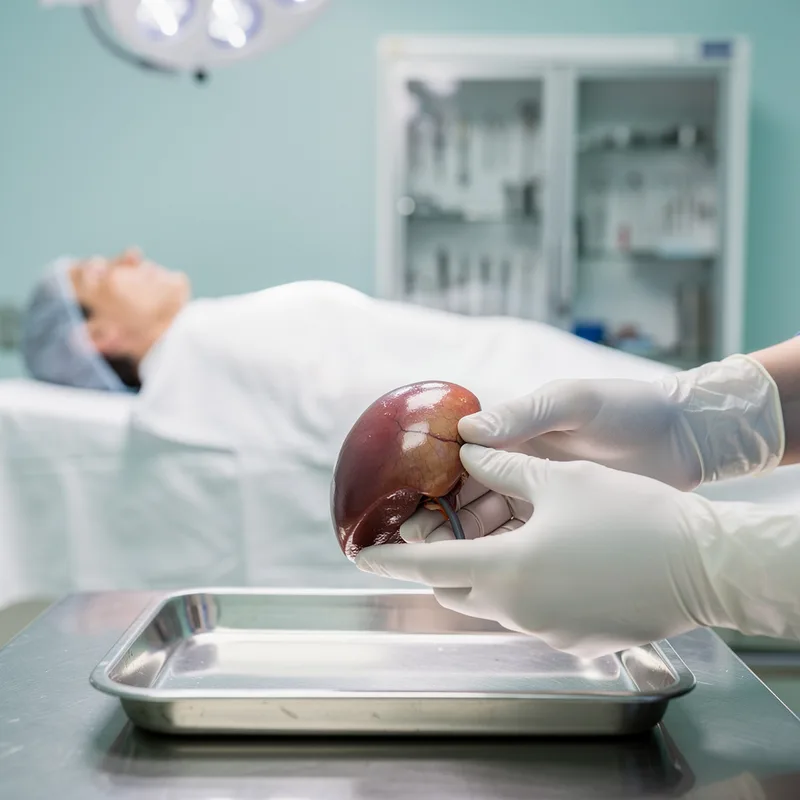
cadaveric
 2
9.9
2
9.9

- adjective
- /kəˈdævərɪk/
- Specialized
- The researcher studied the cadaveric samples to understand the effects of various diseases on human anatomy.
- cadaveric kidney
- cadaveric transplant
- cadaveric organ
Examples
-
The policies for the allocation of livers from cadaveric donors are not uniform in other countries.
Academic text (2003) -
Most transplants are now done with cadaveric organs that have been donated solely on an altruistic basis.
Academic text (1991) -
Sources of suitable and available human cadaveric feet are limited, especially in first-world countries.
Academic text (1990) -
Figure 4 shows design III, using fresh cadaveric bones as an endoskeleton.
Academic text (1990) -
The majority of the sample was male, not diabetic, and received a cadaveric transplant.
Academic text (2003) -
Six fresh-frozen unmatched cadaveric knees were used in this study.
Academic text (2001) -
I went to the anatomy lab at the University of Texas and dissected numerous cadaveric livers.
Academic text (2017) -
One additional patient lost his allograft after 42 months of follow-up and received a second cadaveric kidney transplant.
Academic text (1995) -
Freshly dissected, formalin-fixed cadaveric limbs were obtained from a medical college.
Academic text (1991) -
In 1999, for example, African Americans constituted 11.2 percent of all cadaveric donors (UNOS 2001a).
Academic text (2002)
Surface Forms
Morphology
Etymology
The word cadaveric comes from cadaver, which means 'dead body'. So cadaveric describes something that comes from or relates to a dead body, for example a cadaveric organ used in medicine.