
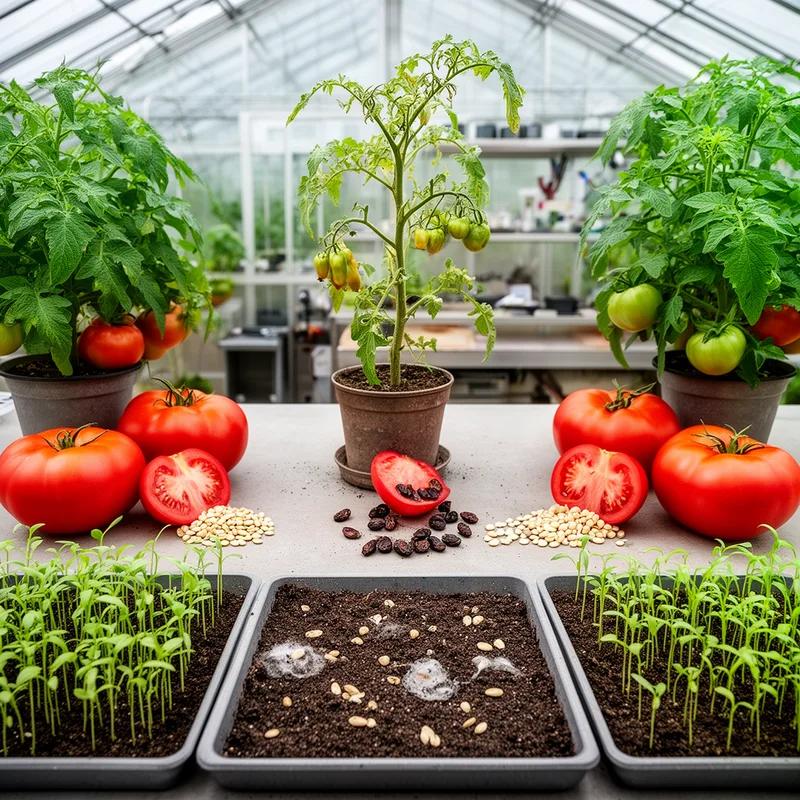
cacogenesis
- noun
- /ˌkækəˈdʒɛnɪsɪs/
- Specialized
- Many animal species exhibit cacogenesis, preventing the successful breeding of interspecies hybrids.
Examples
-
The concept of cacogenesis explains why some hybrids fail to thrive or reproduce.
-
Horticulturists often struggle with cacogenesis when trying to cross certain plant varieties.
-
The principle of cacogenesis ensures that some hybrid offspring do not threaten the integrity of species.
-
The study of cacogenesis reveals significant barriers in hybridization.
-
Researchers are investigating cacogenesis in various species.
-
Horticulturists often struggle with cacogenesis when trying to create new plant hybrids.
-
Many animal species exhibit cacogenesis, which limits the production of viable interspecies hybrids.
Surface Forms
Morphology
Etymology
Cacogenesis comes from Greek parts caco- 'bad' and genesis 'birth' or 'origin', and you can see the 'gen' idea in words like genetic or generate. So it literally means 'bad birth' and is used for hybrids that are not born able to live well or to have young, which explains why some crosses fail.

