
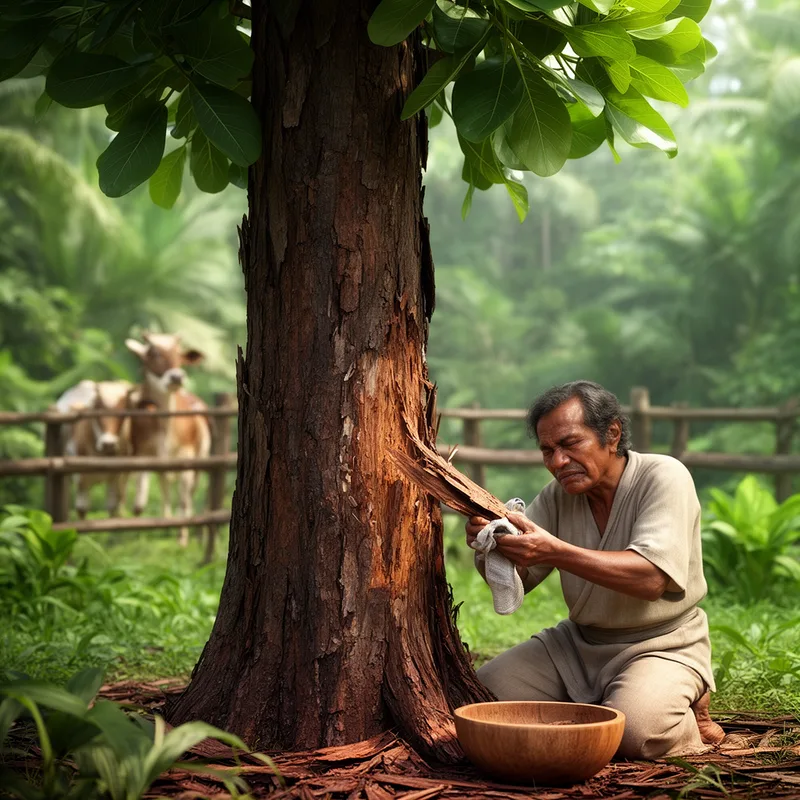
cabbage tree
- noun
- Indian
- Many indigenous communities have long valued the cabbage tree for its durable wood and medicinal properties.
Examples
-
The bark of the cabbage tree was once used to prepare traditional medicines.
-
Farmers warned that the cabbage tree is toxic to livestock if consumed.
-
The cabbage tree grows in tropical regions.
-
Have you ever seen a cabbage tree before?
-
Farmers warned that the cabbage tree is toxic to livestock if consumed.
-
The bark of the cabbage tree has been used in traditional remedies for its purgative properties.
-
Many indigenous communities have utilized the cabbage tree for its strong wood and toxic bark.
Synonyms

A tropical tree with strong wood and toxic, smelly bark used to make the bowels move and kill worms

A tropical tree with smelly, poisonous bark and strong wood whose bark and seeds people use as medicine

A tropical American tree with rough, smelly poisonous outer layer and very hard wood used in traditional medicine
Surface Forms
Morphology
cabbage + tree
As a noun compound, a B1 learner who knows 'cabbage' and 'tree' can transparently infer that this is a kind or type of tree related in some way to 'cabbage' (i.e. a tree named for or associated with cabbage-like features). However, the detailed botanical properties in the given definition (tropical habit, toxic/unpleasant-smelling bark, medicinal uses) are not predictable from the constituents, so the expression is only partially transparent.
Etymology
Cabbage tree for some tropical species may come from old use of the tree's inner bark or seeds like a type of cabbage in traditional medicine. Because the bark can smell strong and parts may be poisonous, the same name now refers to a tree known for its rough, toxic bark.

