
caatinga


 1
9.9
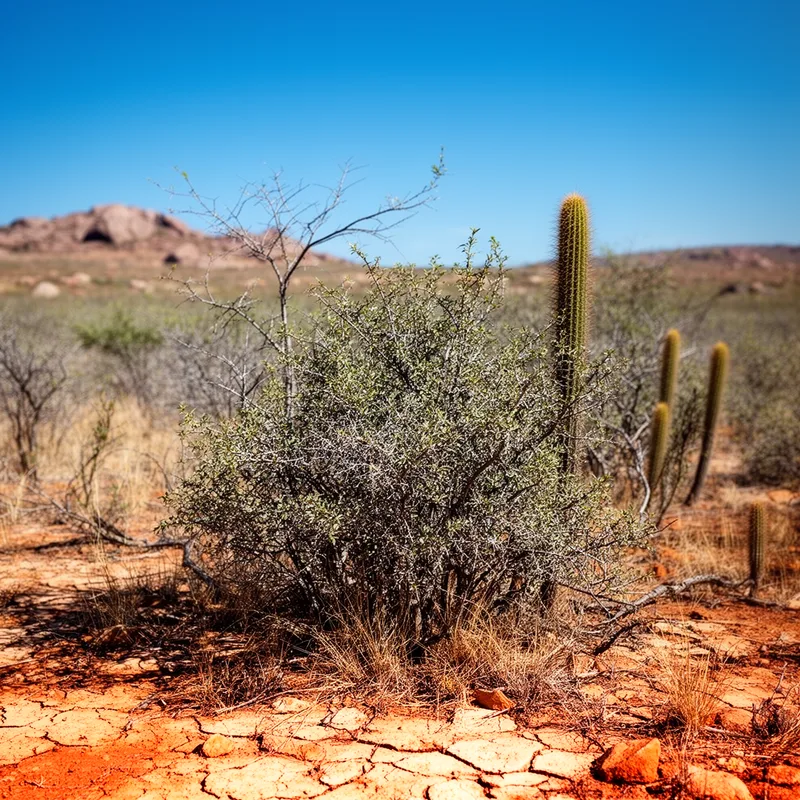
A dry, thorny area of small trees and bushes in northeastern Brazil with plants that survive long dry times
- noun
- /kɑːˈtɪŋɡə/
- Specialized
:
caatinga
- During the dry season, the caatinga becomes almost barren, revealing the resilience of its native flora.
Examples
-
The caatinga region is characterized by dry, thorny bushes and scarce vegetation, making it a distinct ecosystem.
-
In northeastern Brazil, the caatinga is home to unique drought-resistant plants that thrive in harsh conditions.
-
The original vegetation of this upstream segment is a xerophytic caatinga, extremely degraded by centuries of goat herding.
Academic text (1994) -
Thus, frightened peasants downstream fled from the floodplain and erected shacks on the bare caatinga, where they remain.
Academic text (1994)
Surface Forms
Etymology
Caatinga comes from the Tupi words caá ('forest') and tinga ('white'), so it means 'white forest'. That name fits the dry, pale-looking thorny scrub of northeastern Brazil, which often looks light and leafless in the dry season and where plants survive long dry times.