
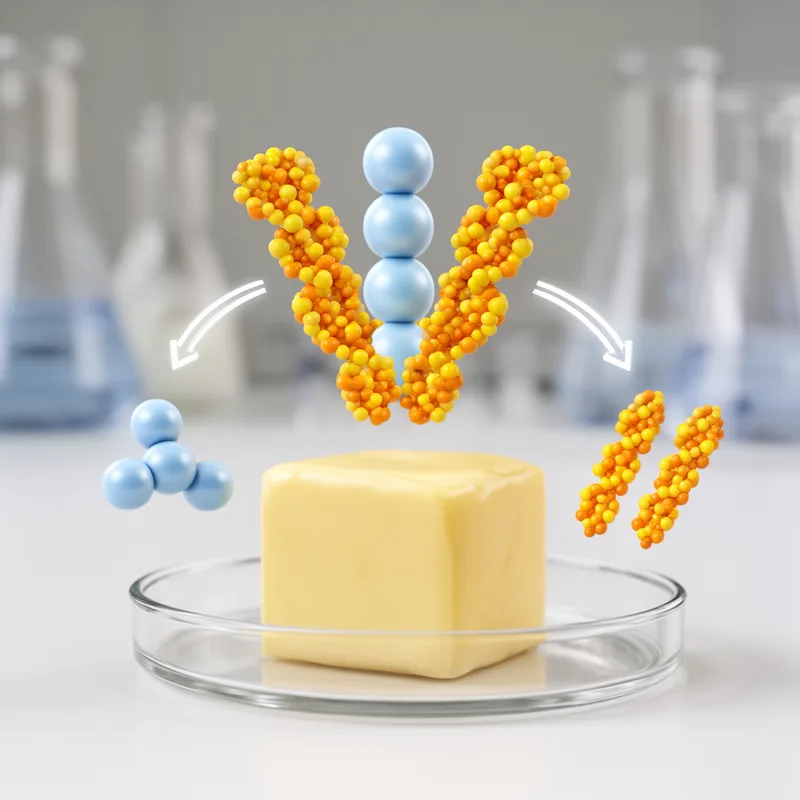
butyrin
- noun
- /bjuˈtɪrɪn/
- Specialized
- The main fat in butter is butyrin, which is a triglyceride of butyric acid.
Examples
-
When butyrin is hydrolyzed, it releases butyric acid and glycerol.
-
Chemists study butyrin to understand the properties of dairy fats.
-
The butyrin in butter gives it a rich flavor.
-
Many dairy products contain butyrin as a key component.
-
Chemists study butyrin to understand its role in the flavor profile of butter.
-
The main fat in butter is butyrin, which contributes to its creamy texture.
-
When butyrin is broken down, it produces butyric acid, adding a distinct taste.
Synonyms
A bitter oily fat in butter used in labs to test enzymes that break down fats
Surface Forms
Morphology
butyrin = butter (semi-transparent) = butyr + in
The form is built from the combining form 'butyr-' (relating historically to butter) plus the chemical suffix '-in'; the relation to 'butter' is real but the combining form and chemical naming are specialized and not obvious to average learners.
Etymology
The word butyrin comes from the root butyr-, which means 'butter', so it was named for the fat found in butter, and the ending -in is a common chemical ending that marks it as a substance.

