
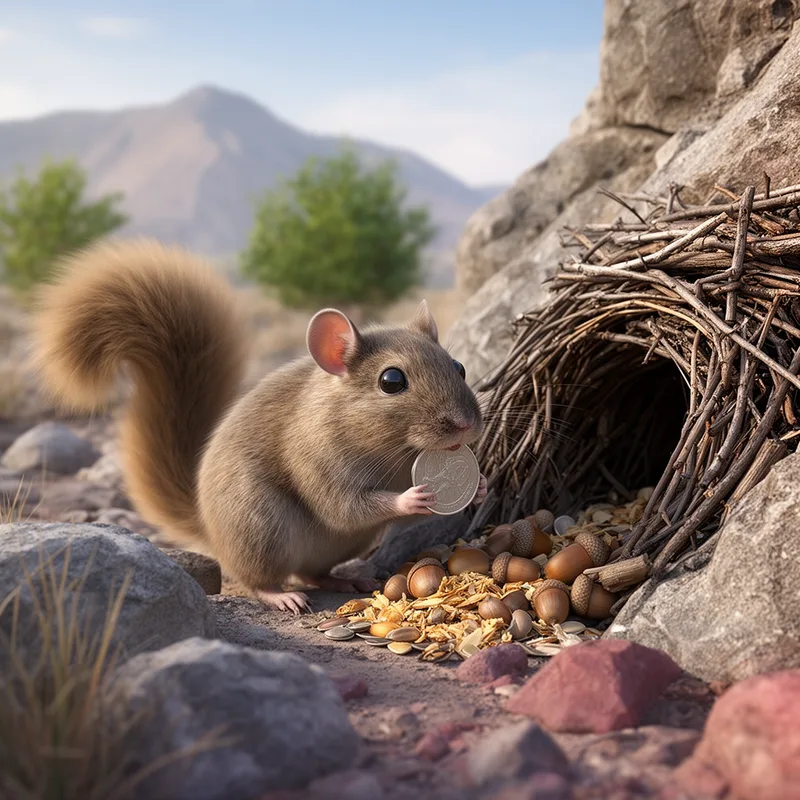
bushytail woodrat
- noun
- US
- Scientists studied the bushytail woodrat to understand its food-hoarding habits.
Examples
-
The bushytail woodrat constructs large nests of sticks and debris near rocky outcrops.
-
A bushytail woodrat can sometimes be seen dragging shiny objects back to its den.
-
The bushytail woodrat is known for its long, bushy tail.
-
In the mountains, we often see bushytail woodrats collecting food.
-
A bushytail woodrat can often be spotted foraging for food in rocky areas.
-
The bushytail woodrat gathers twigs and leaves to build its nest in the mountains.
-
Researchers observed the bushytail woodrat hiding nuts and berries in its den.
Synonyms



 1
7.3
1
7.3
A small North American animal like a rat with a bushy tail that collects objects
 1
6.7
1
6.7
A small wild animal like a rat that lives in forests, builds nests, and often collects things

A small animal like a mouse with a bushy tail that collects objects

A small rodent like a mouse from North America with a bushy tail that collects things for its nest

A small animal with a bushy tail that collects and hides small things

A small mouse-like animal with a thick bushy tail that lives in western North America and collects food and objects

A small North American animal like a rat that collects things to build nests
Surface Forms
Morphology
bushytail + woodrat
The noun is a compound whose meaning is transparently built from its parts: 'bushy' + 'tail' and 'wood' + 'rat' yield the idea of a rat with a bushy tail associated with woody/habitat contexts. This follows regular English compounding patterns, so a B1 learner who knows the constituent words can reasonably infer the general referent even if they don't know the specific taxonomic name.
Etymology
Bushytail woodrat comes from the animal's look and way of life. It is called bushytail because of its thick, bushy tail and woodrat because it builds big nests of sticks and often 'hoards' food and shiny objects, so the name reminds you it is a rodent that collects and stores things.