
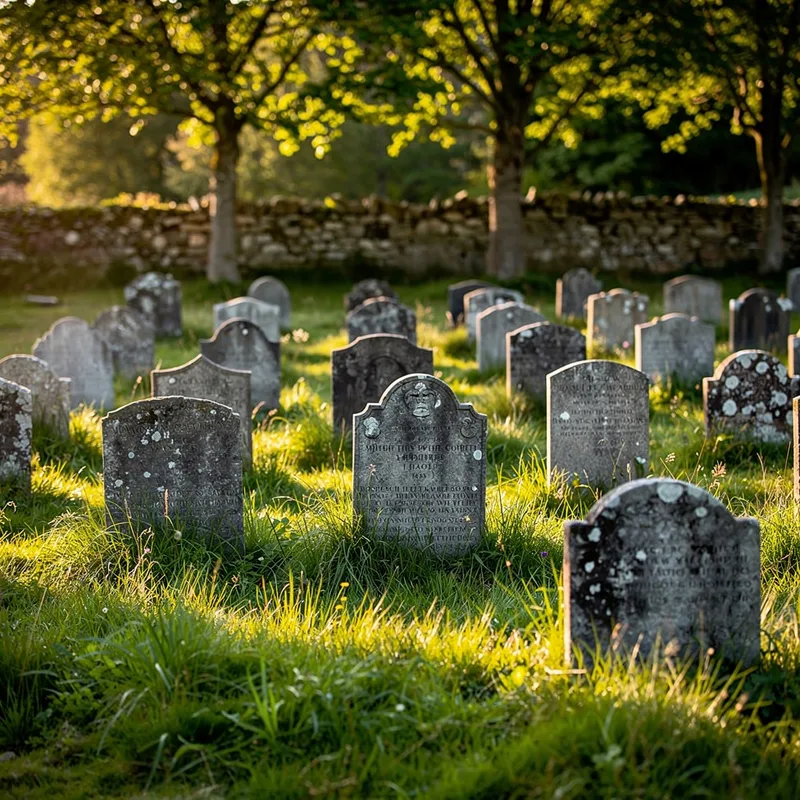
burial ground
 21
3.9
21
3.9

- noun
- /ˈbɜːriəl ɡraʊnd/
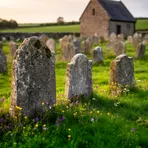
- But not so long ago, many burial grounds were lively places, with blooming gardens and crowds of people strolling among the headstones.
- sites such as burial grounds
Loading YouTube…
Watch on YouTubeWell, he's staying in a place that's right behind a a Native American burial ground.
- Well, he's staying in a place that's right behind a a Native American burial ground.
- This is an abandoned POW burial ground.
- We then discovered that this facility was about to be constructed on the burial ground of the enslaved Africans.
Examples
-
Hence the discovery of a number of burial grounds under the mounds of soil in which the steles were anchored.
Academic text (2000) -
In the nineteenth century, municipal governments saw burial grounds as potential health hazards.
Academic text (2006) -
Ancient burial ground for the royal family.
-
It's an old slave burial ground.
-
The government of France granted use of this land as a permanent burial ground without charge or taxation.
Academic text (2009) -
Metro operates the cemetery both as a burial ground and as an active greenspace.
Academic text (2006) -
We then discovered that this facility was about to be constructed on the burial ground of the enslaved Africans.
-
For 3,000 years Saqqara has been the burial ground for the city of Memphis.
-
This burial ground dates back all the way to the Revolutionary War, which was 1775 to 1783.
-
The ancient cemetery was designated as a burial ground for the community's deceased.
Synonyms
 421
2.8
421
2.8
A place where people are buried, often with headstones
 122
1.8
122
1.8
A place where people are buried after they die
 12
3.5
12
3.5
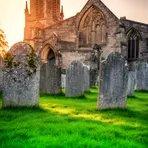
An area of land next to a church for burying people
 11
3.7
11
3.7
A place where people bury their dead
 4
9.9
4
9.9
A large old cemetery for a city with many tombs
 1
6.1
1
6.1
An area of land with graves for dead people, like a cemetery
 1
8.9
1
8.9
A place where dead people are buried

A cemetery like a park with gardens and simple graves for quietly remembering people who have died

A large very old burial place near a city with many tombs
How Big

Surface Forms
Morphology
The meaning 'a piece of land used for burying the dead' is directly and transparently derived from combining 'burial' (the act/rite of interring the dead) with 'ground' (land/soil). This is a straightforward compositional noun-noun modifier pattern common across languages, so a B1 learner who knows both constituents will readily infer the MWE meaning.
Etymology
Burial ground comes from the simple picture of a piece of ground used for burial, a place where people were put into the earth. That's why the words mean a place 'to bury the dead' or a 'cemetery'.