
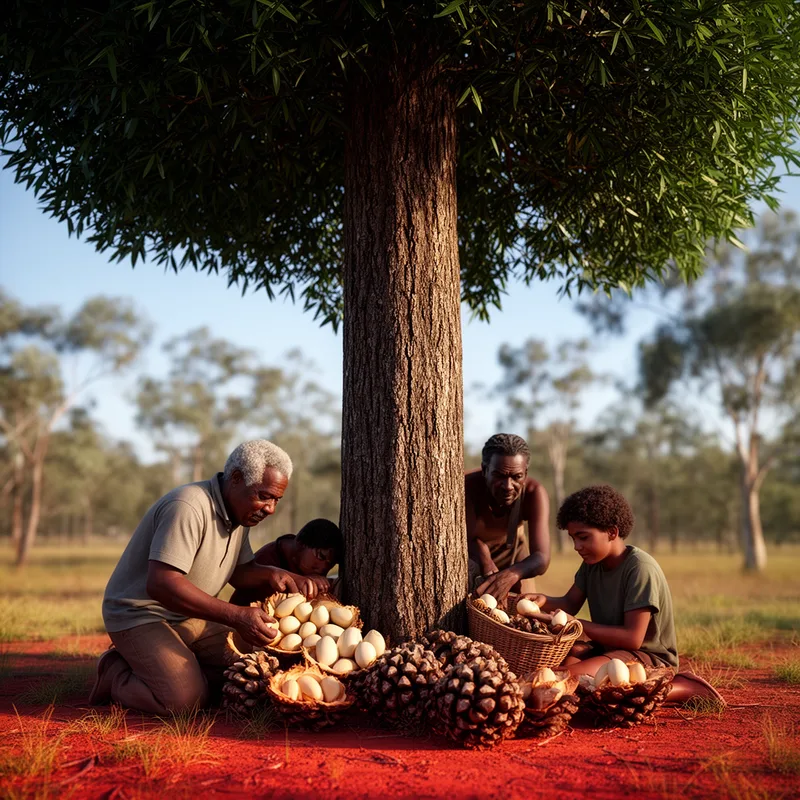
bunya bunya
- noun
- Australian
- The bunya bunya tree can grow up to 50 meters tall.
Examples
-
Many Aboriginal groups celebrate the bunya bunya harvest through traditional gatherings and ceremonies.
-
The bunya bunya is valued for its nutritious seeds, which resemble chestnuts in flavor.
-
The bunya bunya can grow to impressive heights, making it a striking feature of the Australian landscape.
-
Many bunya bunyas can be found in Queensland.
-
Many Aboriginal groups celebrate the bunya bunya harvest through traditional gatherings and ceremonies.
-
The bunya bunya produces large seeds that are a staple food in Indigenous Australian diets.
-
The bunya bunya tree is significant in Aboriginal culture for its role in communal feasting and storytelling.
Synonyms

A large Australian tree that makes big cones with seeds you can eat
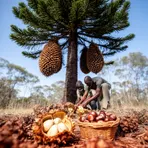
A large Australian tree that makes big cones with edible seeds like chestnuts

A large evergreen tree from Australia that has big cones with edible seeds
Surface Forms
Morphology
A B1 learner who knows 'bunya' as a tree that produces large cones and seeds can readily infer that 'bunya bunya' refers to the tree's seed/nut; the meaning is directly linked to the constituent noun. The reduplication here functions as a lexical name rather than an idiomatic shift, so the overall sense (the edible nut from the bunya pine) is compositional and predictable.
Etymology
Bunya bunya may come from an Aboriginal word for a very large native pine tree that makes heavy cones full of big seeds. People held special 'gatherings' to collect those seeds, so the name now brings to mind that tall tree and its big harvest.

