

bullet fingerprinting
- noun
- /ˈbʌlɪt ˈfɪŋɡərˌprɪntɪŋ/
- Specialized
- Advances in bullet fingerprinting have made it easier to solve firearm-related crimes.
Examples
-
Because of bullet fingerprinting, investigators quickly identified the weapon involved in the shooting.
-
The police used bullet fingerprinting to match the bullets found at the scene to a specific handgun.
-
The police used bullet fingerprinting to solve the crime.
-
Is bullet fingerprinting effective in criminal investigations?
-
The forensic team used bullet fingerprinting to link the crime scene to the suspect's firearm.
-
After conducting bullet fingerprinting, the detectives were able to trace the bullet back to the specific gun used in the robbery.
-
By applying bullet fingerprinting, law enforcement can identify the exact weapon that discharged a bullet in a shooting incident.
Synonyms


 1
7.7
1
7.7
A way police use to find which gun fired a bullet by matching marks on bullets and casings
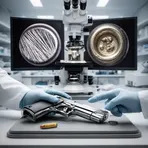
To find which gun fired a bullet by matching marks on the bullet and its case
Surface Forms
Morphology
The meaning is directly formed by combining 'bullet' (the projectile) with 'fingerprinting' (the process of identifying via unique marks), so a learner can infer it refers to applying fingerprinting techniques to bullets to identify a firearm. This noun–noun composition follows normal English compounding patterns and is therefore immediately comprehensible to someone who knows both constituent words.
Etymology
The term bullet fingerprinting comes from the idea that a bullet picks up tiny, unique marks from the inside of a gun, so the process is like fingerprinting a person. Investigators match these marks to a gun, so the phrase means 'identifying the firearm that fired a bullet'.