
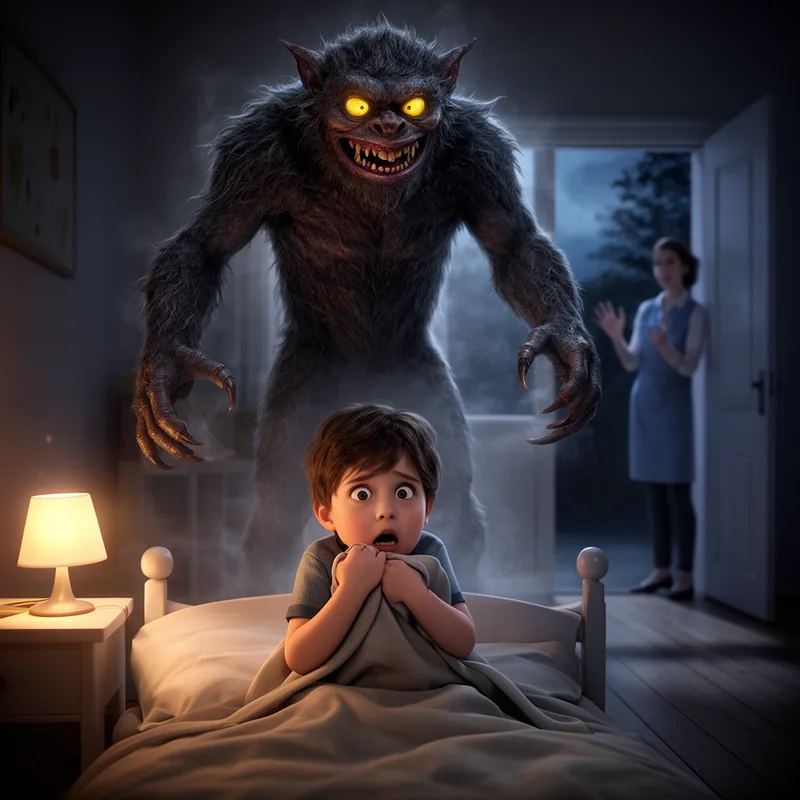
bugbear


 1
9.9
1
9.9
An imaginary monster used to frighten children
- noun
- /ˈbʌɡˌbɛr/
- Literature
:
cosa que da miedo
- As a child, she believed that the bugbear would come out of the shadows if she misbehaved.
Examples
-
The children's stories featured a fearsome bugbear that lurked under their beds at night.
-
Besides, that old bugbear would have her for breakfast.
-
To the young boy, the bugbear was a terrifying creature that kept him from sleeping soundly.
Synonyms
 34
8.1
34
8.1
An imaginary monster adults mention to scare children into behaving
is an imaginary monster used more generally to frighten children
 25
7.4
25
7.4
A made-up creature adults tell children about to scare them when they misbehave
is a general imagined creature used to frighten children
 15
9.9
15
9.9
An imaginary creature parents mention to frighten children
is the broader idea of an imaginary creature for frightening children

bugaboo
vsbugbear
6
9.6
A thing that causes fear or worry, often without real danger
is specifically an imagined creature mainly used to frighten children
Antonyms

How Scary
monster
395
2.5
- Offensive
395
2.5

bogeyman
25
7.4
- Baby Talk
25
7.4
bugbear
1
9.9
- Literature
1
9.9
imaginary creature
- Literature
Surface Forms
Morphology
Etymology
Bugbear comes from the old word bug meaning 'goblin' and the animal bear, so people pictured a scary 'goblin-bear' used to frighten children. That's why the word means an imaginary monster used to scare kids.