
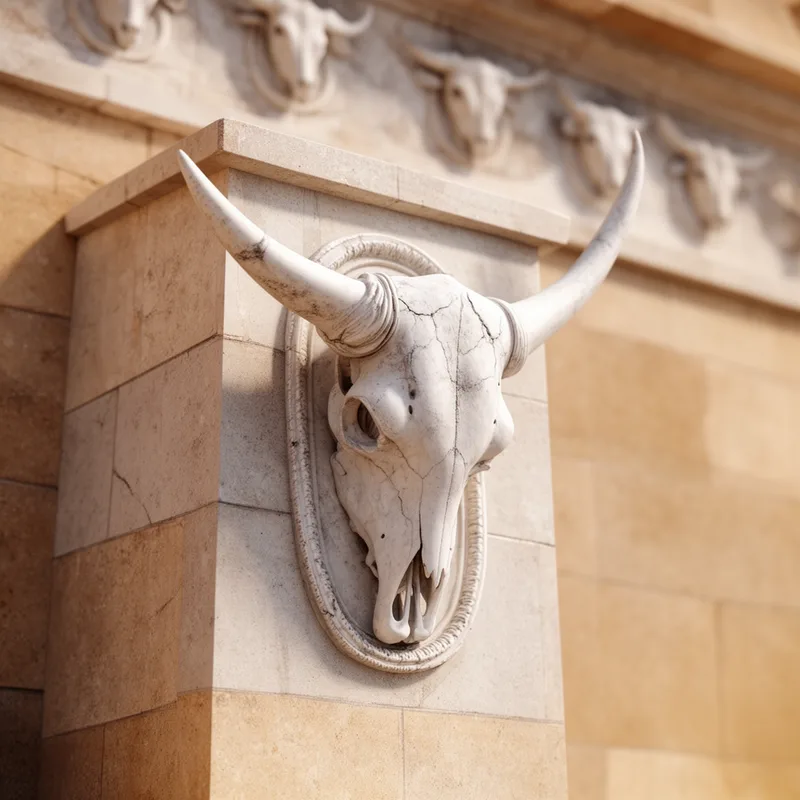
bucranium
9.9
An ox skull carved as a decoration in ancient buildings or art
- noun
- /bjuːˈkreɪniəm/
- Archaic
:
bucráneo
- Archaeologists discovered a stone bucranium among the ruins of the temple.
Examples
-
The museum's exhibit features a marble bucranium from the Roman period.
-
The ancient altar was decorated with a carved bucranium at each corner.
-
Look at that stunning bucranium on the mantelpiece!
-
The ancient temple featured a large bucranium above the entrance.
-
The museum's exhibit features a marble bucranium from the Roman period.
-
Archaeologists discovered a stone bucranium among the ruins of the temple.
-
The ancient altar was decorated with a carved bucranium at each corner.
Surface Forms
Morphology
Etymology
Bucranium comes from Greek roots bous 'ox' and kranion 'skull'. The part cranium is the same as English cranium meaning 'skull', and bous is like an ox or cow, so a bucranium is literally an ox skull or a carved ox skull used as decoration in ancient art and buildings.

